

Most service businesses don’t fail because they lack growth—they fail because their financial systems break under scale.
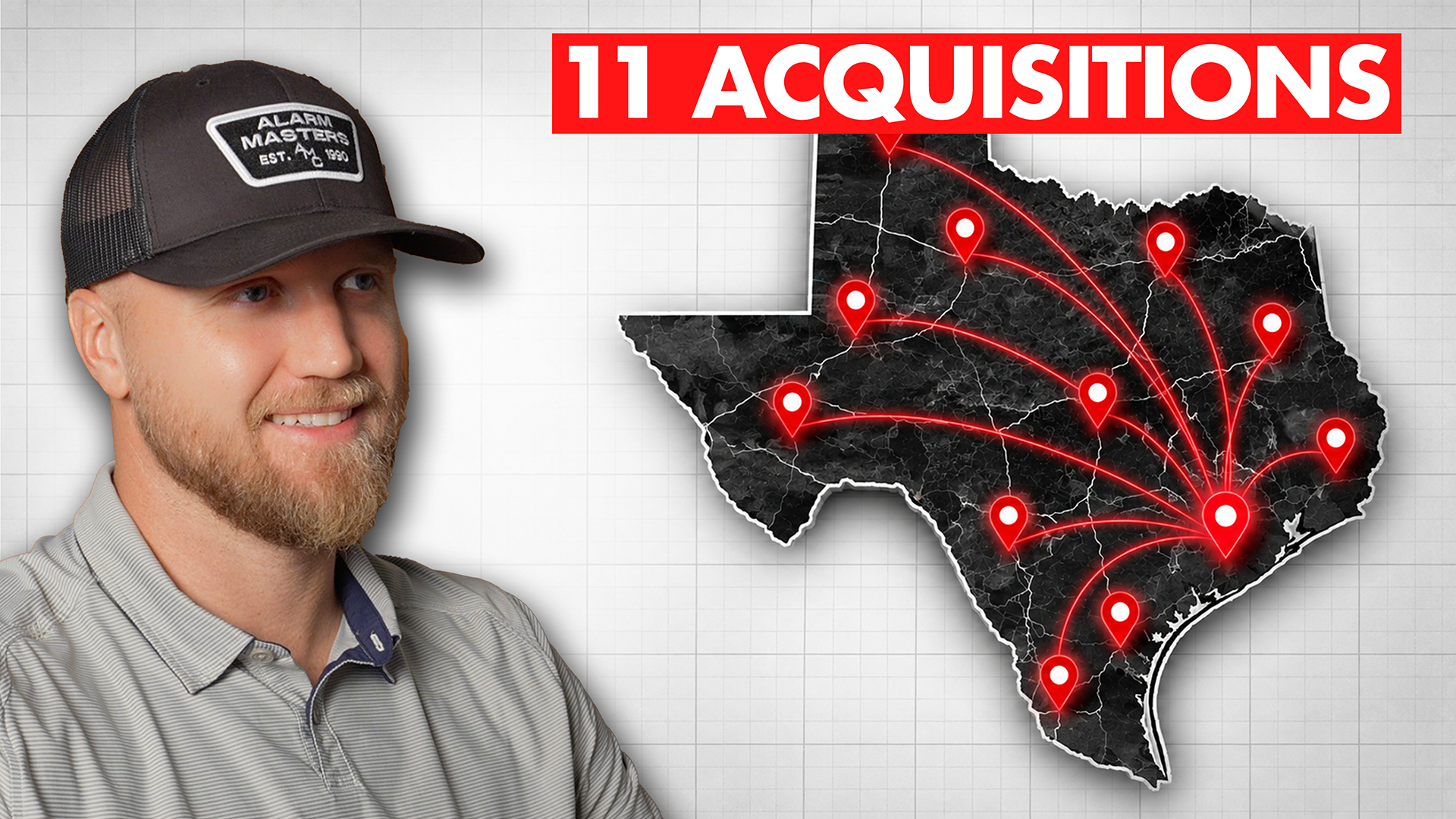
In this episode of Entry & Exit, Stephen Olmon and Collin Trimble break down the real-world lessons they’re learning while cleaning up their financials during rapid growth. From cash vs. accrual accounting to inventory control, job costing, and RMR reporting, this episode explains what actually matters when lenders, buyers, or equity partners start asking questions.
If you plan to acquire businesses, raise debt, bring on equity, or eventually sell, this conversation will help you avoid painful (and expensive) mistakes.
What You’ll Learn:
- When cash accounting works—and when accrual becomes unavoidable
- Why being “accrual-ish” causes major financial problems
- How poor inventory and purchasing controls destroy margins
- What senior lenders and buyers expect in your financials
- How to track RMR adds, attrition, transfers, and roll-forwards
- Why clean financials give you leverage and optionality
This episode is essential listening for security, alarm, and service-based business owners scaling past the $3M–$10M range.
🔗 Connect
Owned and Operated
New Episodes Every Wednesday!
Subscribe For More
EE 16
[00:00:00] You know, we talk a lot about scaling and as we have grown, we've experienced more pain related to that.
You just wanna like operate off of cash forever. That's not a bad way to live. If you are trying to take large steps forward in whatever way, you're gonna have to be prepared to play ball financially.
We think that any company that is healthy is a company that could be sold. You can grow fast in a big way without. Super clean inside into your financials, but at some point down the road you're gonna experience pain related to that.
There's no get outta jail free card on this if you're trying to deal with really sophisticated financial partners is what it's.
Welcome to Entry and Exit. My name's Steven Oman. This is my very handsome business partner and, uh, co-host Colin Trimble. We run Alarm Masters in Texas and we also run this podcast. And the goal of entry and exit is to provide practical, tactical advice to people [00:01:00] running security and life safety businesses across the country.
And today, what are we gonna talk about con.
We're gonna talk about how to get your financial house in order and why does that matter? Because we're going through it right now. You know, we talk a lot about scaling. Around here, growing, buying businesses, prepping your business to sell. When you want to do that, there's dollars that are coming in and outta your business.
And it's really important that you have your financials tight, particularly if you're acquiring businesses, um, in the way that that's done. And you know, I always thought, hey. We've got a solid revenue number that I'm really confident. We've got good cost of good, sold our overhead. You know, what's a balance sheet?
I don't know who really knows, you know, statement of cash flow, I don't know what that is. Net income, that's all that matters. And so I didn't really, I didn't really focus on too much outside of the p and [00:02:00] l. A couple areas on the balance sheet. And as we have grown, we've experienced more pain related to that.
We thought that this would be kind of an app time to do this because we are currently going through cleaning up all of our financials, upgrading all of our financial systems. In 24, from end of 24 into 25, we converted from cash to accrual and uh, we thought that that was gonna be an easy thing. Just, yeah, easy.
Just do a couple spreadsheets, track percent to complete amortize, some RMR, and baa. Bang. Good. It was not badabing or baap. Boom. It was painful is what it was.
It was, it was bad. Ochi.
Yeah, bada, yeah. Bad ochi and, yeah. Exactly. And so we, um, and, and so two things have happened. Well, a lot of things. The big one was at the end of the year, we realized something was off with our cost of goods sold.
And did not understand that. Um, we [00:03:00] were tracking purchasing and inventory completely wrong. We weren't doing inventory in the right way. We didn't have purchasing controls. And so as a result, our inventory balance was negative, which is not supposed to be negative. Um,
not,
not when you
have inventory,
right?
Yeah. And so we spent a lot of time at the end of last year trying to, we went through every single purchase we made. Literally thousands of purchases and audited every purchase against every work order, and it took a massive effort across our entire team. It was a huge disruption for about a month. It just threw everybody off.
And so as we've. Had to clean that up. What we've also realized is going into, as we're growing, we're sort of getting into a world of, um, engaging with senior lenders and, um, and different folks and realizing that hey, there is things that they really wanna see and what are these things that they want to see?
And, and honestly, a lot of the things that senior lenders wanna see or equity groups wanna see, they're all kind of the same thing. Um, so if you are [00:04:00] thinking about selling your business, buying another business, raising equity. R raising debt, taking out some senior level debt. This is important for you.
There is a lot of operational value to it as well, because it's gonna give you clear insights into your performance. There's things like, Hey, I want to track gross profit across, uh, lines of revenue, right? So what's my average gross profit on RMR versus service versus projects? I think that that's really important data, understanding your purchasing and inventory trends.
Um, having a really tight purchasing control so you're not buying things that are sitting on your shelf. All all of that is important Operationally, we're probably not gonna touch a ton on that because, uh, this is more about, Hey, as you're growing and here's what I would tell you. Do not start on this when you're right about to go raise money or go get senior lenders.
Like at a minimum, you want a year of clean financials. Yeah. Before you go into this process. Because it is, it's painful and we're going through it right now. Um, [00:05:00] so yeah, I mean that, I would say those are kinda the big reasons that you wanna have clean financials. Steven, anything that you would like to add to that about like why you think it's important that you should have super, super tight financials?
It gives you optionality. Um, you know, you could run and, and just. Uh, very, very quickly. If somebody's not super clear on cash versus accrual, um, cash accounting is, um, I count the dollars that you came in and, and went out in a given month, and that's my financials. It's that simple. Yeah. Um, and that, that's nice in a lot of ways.
Like it is simple. You. Don't necessarily get the full picture of how, what's actually happening in your business. Yeah. Especially when you're doing any real degree of install work. Mm-hmm. That starts to get skewed. And um, and also when you have a lot of non monthly RMR, you also kinda lose track and it gets a little, um, I think you lose clarity when you're just cash accounting.
Yeah. But. Accrual accounting, [00:06:00] which is, Hey, we're going to accrue these revenues and costs when they incurred or when we did that work, not when we got the cash or paid the bill.
Mm-hmm.
Um, that takes a lot more work to do with excellence and, and to be kinda gap compliant, if you will. Look. I if you just wanna like, operate off of cash forever, cash accounting, operate off of cash that's coming in your business and you are debt averse and you're growing slow and method like, God bless you.
Yeah, that's great. Like that's, that's not a bad way to live. Um, if you are trying to take large steps forward in whatever way, um, whether it's acquisition oriented or else. You've, you know, some people, this happens where they wanna like buy a building, they're tired of paying an an expensive lease. And so sometimes it's like more real estate driven.
Like there's a lot of different, um, reasons for this in, in a security company. But, um, it gives you more optionality, uh, more, uh, third parties are gonna be [00:07:00] interested in working with you. In whatever, you know, whether it's a bank or an equity group or whatever, um, if you are dialed in financially Yeah. And what you might think is being dialed in is probably way less invasive and way less prepared than what they expect.
Yeah, we were having a discussion with somebody about this, this week that, you know, they're like, Hey man, I, I, I don't know, are you guys, you, uh, you know, getting ready to sell or what? Why are y'all focusing so much on this right now? It's like, no, we don't have a plan to sell, but we think that any company that is healthy is a company that could be sold.
Right? So that's kind of the general theme that we have is even if you're gonna keep your business for eternity, uh, which is great, enduring businesses, amazing love that you should have a business that could be sold at any moment. 'cause that's a healthy business. Yeah, that's what a healthy business looks like.
And so that's right. That one of those things that's part of that is financials. And you may say, yeah, I'm not gonna raise debt. I'm not gonna go acquire a business. I'm not interested in that. Maybe, maybe not. You don't know what your [00:08:00] future looks like. And so, mm-hmm. I would just say, get really tight on this and get a really tight bookkeeper of like, Hey, I want to go line by line on account by account basis, on my balance sheet and my, uh, p and l at, at least at a minimum, and really understand what's going on.
And then your statement of cash flow becomes really important whenever you're accrual accounting to kind of. Actually help you understand how you're managing cash. So that kind of lead the cash versus accrual thing. Great. Uh, really great segue because I think that one big key theme we're gonna point out right now is you've gotta pick a lane.
And, and here's where it gets real tricky, y'all. It's like if you're, if you're cash, it's pretty easy to track. It's truly dollars in, that's what I recognize, dollars out. You know, that's what we pay. The minute you go accrual, you need to have. A purchasing system, which we did not have all of last year, and we're gonna talk about how massive of a pain that was for us.
Yeah. Uh, you need to be able to have a project, job costing system. We were using spreadsheets, regret it wouldn't do that again, or we got nipped in, I mean, it [00:09:00] hurt. So we had to do that. We have, you have to have a way to amortize your RMR, so you have to have a system that'll amortize your RMR. So that it's recognized, you know, one 12th or whatever.
And then also you need to have that same journal entry into deferred ca uh, deferred revenue. So there's a whole bunch of things that you have to do if you're gonna go from cash to accrual. And it's really like, I mean, if I were, if I were advising somebody, I would say, you, you need six months to really like, create the process and the procedure, and you may need another body.
To help you manage, especially around purchasing, which is a really big part of this whole thing. It's probably the hardest part of all this for us is, um, is managing that. And I'm gonna, I'm gonna tell y'all right now, we are quite literally in the middle of still getting this tight. We, we are not experts here.
We have been figuring out and talking to friends about different things related to how to do this, how, how do we do this journal entry? How should we think about this inventory? Um, because we're, we, we don't have all the answers, but what I will tell you is pick a lane. Don't try to be accrual ish. We joked when [00:10:00] we went accrual, we're like, yeah, we're, yeah, we're ac cruel ish.
We're kind of. There. Yeah. And it's like what we learned is, no, you're all the way accrual. You're not, because it all ties together. Yeah. So if one bucket is not a hundred percent dialed, you're grow, you're gonna manifest a really big problem. So that is something that I would say really focus on is you are either squarely.
Cash or you are squarely accrual. And we've seen, we had a friend that tried to sell his business. He's like, yeah, mostly accrual. Yeah. But it turned out he wasn't, he was basically doing accrual on his revenue, but not on his expenses. And so everything was getting jacked up and the group that was buying him was like, Hey, this isn't gonna work like this.
All this all needs to be cleaned up. So you need two years for us to either convert you back to cash or convert you to accrual to be able to get a actual. Picture of what your financial health looks like. So pick either one. Find a bookkeeper that knows how to do accrual or cash can cash, most can do cash.
Um, but find somebody that is, specializes in accrual and then figure out what your technology [00:11:00] stack is gonna be coming into that.
Yeah. And if, if you are someone who's thinking about like big boy. Debt, big boy, senior lending or raising capital. Just for that segment of people that you're thinking quite large, you should go accrual.
Yeah. Um, you should spend the time and the effort and, and even if you haven't in your cash, when they go analyze you, like. And, and do due diligence on you. Like they're going to retrofit your financials to kind of view that from an accrual perspective anyways. And so it probably behooves you if you are kind of thinking directionally that way to go ahead and bite the bullet.
Do the foundational work and it's also gonna give you a lot more knowledge about your business and be on more of an even playing field with any of those groups or third parties and how they're gonna look at your business. Um, and then we see that a lot. Like we talk to friends, it's like, well, I thought my business was like pretty great and it was this, that and the other.
And then I started talking [00:12:00] to this really large bank and they kind of gave me a bunch of negative feedback and they said, my numbers are this, and I don't know where they got that from. Well. Be because they're looking at it from an accrual perspective, not from a cash perspective. So accrual is more painful the more that you are doing, like multi-month, weeks long, large install work, right?
Because if you only do three day projects or less. Well then you never, I guess you could cross like January 31, Feb one. Like you could cross a month theoretically. But basically you're always gonna be like intra month.
Yep.
On a project typically. So if you are living that life, then accrual actually you shouldn't be as concerned about.
It's still a lot of work, but it's easier if you're like us and you're doing large install projects. Some of these are months long progress billing like it is. It is difficult.
Yep. Yeah. And your billing to the customer is totally, I [00:13:00] irrelevant to your accrual accounting from a p and l perspective, not obviously not from a statement cash flow perspective, but, but from a senior lender.
So what are some things senior lenders look at a, they wanna understand? How long have you been on whatever accounting method and can you, like, do you have a clean cutoff of like, I was cash then I was accrual, here's what it was. And then what adjustments did you have to make as a result of that? 'cause they're gonna scrutinize.
Honestly, anybody that's reviewing your financials for any reason is gonna scru or going to scrutinize any adjustments you're doing. So those adjustments you're doing, 'cause you're trying to clean up an inventory balance or a goodwill balance on your balance sheet or whatever, you've gotta have some narrative and like justification for that and that, and that kind of leads to the second thing is they're gonna require you to have audited financials.
So that is an accounting firm is going to come in, that's a third party, and they're gonna look at every single one of your invoices. And all of your payments received and all of your vendor invoices and pos, and they're going to rebuild your financial statements from the ground up to see if they actually match.
And [00:14:00] the cleaner your systems are and the clean, the easier and less expensive it is for that, that audit. The, the, the more messy you are, the harder it is. Like we, we are gonna have audited financials for last year. It's gonna be painful because that was our first year going to accrual and it was not perfect.
And it's specifically around the way we did inventory and inventory control. Um, so that was really tough. Another thing that I think is really important is having a really clean process for closing each month and each and end of year. So what is that checklist? Who is involved in that closing procedure?
Yeah. And who owns that? And we didn't have that. We were just sending reports willy-nilly that were not audited, and like the service manager hadn't finished closing out all the service invoices and then the, the AP person was sending those, it was just like a mess. And so we still are tightening that up to this day.
It's not tight, and we're still trying to figure that out, finding areas where we need to have a better closing procedure. So that's, that's a big one. And actually senior lenders will literally be like, Hey, can you send us your document that [00:15:00] shows your, your closing procedures? And it's like, oh, sure. You know, let me get into chat GPT real quick.
And
yeah, I, there's a couple, a couple other things that quickly come to mind that, um, especially, well really any third party when you're kind of grown up, you know, and, and trying to scale, they're gonna wanna understand any sort of debt you have. They're gonna wanna understand any sort of historical, legal issues you had and liens and anything that.
Would be perceived as risky or negative or anything bad. Like you want to have all of your kind of, uh, explanations and history and all that ready to just say, Hey, here's this thing. Here's what happened. Here's, you know, context. Don't, don't hope that they're not gonna ask about that thing in the corner that you're like, oh, they don't ask about, they're going to.
Yeah,
they will. Um, and then, um, a [00:16:00] few other things that they're definitely going to wanna understand are revenue and GP and underlying labor, like direct labor costs per, you know, project versus service and, and profitability by, uh, kind of service line, that sort of stuff. Uh, wanna understand your, um, what we're gonna talk a lot about RMR here in a second, but definitely several different core data points on RMR.
But not just recurring, also reoccurring so that, you know, a lot of, you know, these parties are sophisticated and they're, they're, they have other financial metrics in mind that you don't necessarily manage to today. Yeah. Mm-hmm. They have ratios, they have internal metrics that they are underwriting to, whether it's like an equity group or a lender, whatever it may be.
And so they have different standards, different numbers, and, and your brain might be melting going, I don't even know what that means necessarily. Can you explain it? And that's fine. You can ask. Um, they'll tell you, trust me, because that's how they are looking at your business. And [00:17:00] so you're gonna have to.
Uh, be prepared to play ball to get them the information and data they need. So that's why all of your internal data, your books, the cleaner they are, the more you're able to kind of flex and form to what they're looking for.
Yep. That's a really great point. Um, RMR attrition is one of the big things that senior lenders and equity groups are gonna be looking at really heavily in RMR attrition.
And, and it's not just attrition, it's, it is really like RMR analysis and so. We didn't have this, um, we weren't set up for it, and we had to go back and do some kind of manual work to get to these numbers, but effectively what? Anybody that's gonna be raising any type of debt or equity, or candidly, if you're selling the person that's going to, they're, they're gonna wanna know these figures.
They're gonna wanna know what was your ending RMR balance for a given year. So that would be the beginning balance of the following. Sorry, ending of the month. Beginning of the next month. Then they would say, what organic [00:18:00] RMR did you add? So like your sales team, whatever, marketing, what, what did you add?
What inorganic. RMR, like, did you purchase some accounts from somebody in that particular month? That's probably a little less frequently. Um, what RMR did you lose? Attrition of that RMR, how much of it was what they would call a resign or we call it an account transfer. So you know, one homeowner or one business moves out, another one moves in and they take over your monitoring.
So they would, they would not cancel that. They would not penalize you for that, but they wouldn't reward you for the ad as well. So you would need to do an ad and deduct for any of the resigns or account transfers. And then what they would want to say on the inorganic side is how much inorganic RMR did you have?
That was. That was lost, but was covered by some type of holdback or contingency, right? Right. So if you did a purchase and you had a 10% holdback, they don't penalize you as long as it's within that holdback. And that gets you an ending RMR balance basically for that month. And we did [00:19:00] not have that, uh, we, and we had a lot of our, um, of course we had attrition and we had ads, uh, but we weren't tracking like March of 2025.
What was our exact. Number. We knew what it was anecdotally, but we didn't know what it was exactly. And you gotta have a story behind that.
Yeah. They'll call that an RMR roll forward. Yeah. And to to, to more senior, more sophisticated parties. That's just like table stakes. Yeah. That's just something they expect you to have.
And so if you have. Been kind of a smaller business and you're growing again, this is just one of those things, like this is why we do this. We are trying to prepare people, trying to, um, teach people what we are learning in real time.
Yeah.
Uh, and so this is, this is an area where if you don't, and we were just talking to another friend, uh, we've got a lot of friends, you mentioned our friends, we have a lot of friends and people reach out to us.
Yeah. People reach out to us from, you know, listening to this and so we were talking to someone. Um, in the state of Texas, uh, [00:20:00] recently, and they have a pretty sizable operation. They're doing well. They, they don't have hardly any. Real time look into their RMR data at all. Really?
Mm-hmm.
And they're growing, like they're, they're a healthy business in a lot of ways.
So some of these, these parties, like this is just expected. Yeah. And if you don't have it, you're going to, it's gonna be painful. And they're, it's not like they're gonna change their mind. They say, okay, well. What, how are you gonna solve for this? 'cause you have to give us this information.
Right? Yeah, that's a really great point.
There's a lot of really successful business owners that are growing that don't have visibility into their finances. I don't, I don't think you, that's the tough thing about this conversation, right? It's like you can grow fast. In a big way without super clean insight into your financials, but at some point down the road, you're gonna experience pain related to that.
Yeah, and that might be [00:21:00] when you sell or when you buy, or when you raise, or when you whatever. Like you're gonna have some amount of scrutiny. Now, all the power to you, if you're not gonna raise any money, you're not gonna take on any debt, you're not gonna have anybody that's coming on your cap table.
Then really, you just need whatever you need to be operationally efficient.
Yeah.
So that's, that's what I would say. But I, I, I assume most of the listeners here are listeners here are going to do some type of capital raise at some point and are probably going to sell their business or buy another business at some point.
And these are all things that you should be looking at if you're buying a business as well. Um, yeah, so that RMR, that RMR amount is super important. Tracking that. Have somebody on your team, don't make it. You, unless you're a really small business and you don't have a lot of people, make it somebody on your team.
Like, Hey, your job is to fill out this spreadsheet every single month and make sure it's tight because the RMR is big.
Two points. Two points I wanna make one. Um, is this is true whether you're talking to kind of a generic [00:22:00] big boy bank mm-hmm. Or you're talking to one of the more industry specific RMR lenders.
Mm-hmm.
Um, who are gonna lend against. A multiple of your RMR versus a more traditional lender that's gonna think about, um, a multiple of your EBITDA or your s st e, right? Yeah, that's
a great point.
So this is all the, it's all the same. So they're gonna care about mostly the same things within 5% of each other.
You know, it's gonna be the same types of lists or, or requests that you'll get. The other thing, the other point I wanna make is outside of some of this really nuanced RMR type of information. This is true in nearly any. Industry service industry, commercial service industry, like a lot of this stuff are just truisms.
And so if you have, you know, an HVAC company or a plumbing company or roofing, fencing, any, anything that kind of tastes. Uh, like chicken, you know, [00:23:00] like it's kind of like this commercial service. Mm-hmm. And even for a lot of people, we have a lot of friends kinda in the home service side too. Yep. We have a small book of residential, uh, but more that are more residentially focused in security or just like home services.
All the stuff we're saying is mostly gonna be pretty applicable to you.
Yeah.
As well. And so it's, there's no get outta jail free card on this if you're trying to deal with really sophisticated financial partners. Like
Yeah.
It just is what it is.
Totally agree. I wanna get back to tactical for a second and kind of go down to what do you have to do to convert to accrual accounting?
And this is not all encompassing, so I just wanna. Clarify the, like, this is not gonna be the only checklist, but this is gonna be, this is gonna be pretty, pretty broad, but it is a lot of the things you need to consider. So you've gotta think about, uh, revenue and expenses and how you're going to track those.
And so in accrual accounting, you recognize revenue and [00:24:00] expenses. In the month that they were completed. So to give you an example, if you have a service call that you went in one day, changed the battery and closed the service call that all of the revenue and the cost of goods sold, which would be the labor and the material would all be recognized in that month, easy.
If you have a project that spans three months, and let's just say it's a hundred thousand dollars project, and in your first month. It's a hundred thousand dollars of total revenue and 50,000 of costs for basic numbers. And in your first month you did. 25%, then you would recognize 25% of the revenue and 25% of the cost.
Right? And so that's how you would be thinking about that. So, but, but that's, so we're, we're gonna drill down a layer deeper than that. 'cause that's just high level. 'cause there's some consequences of that. And then on the RMR side, you have to think about. Your RMR contracts. If you have somebody that pays you three years in advance, you have to have a spreadsheet or some type of system that is gonna amortize that [00:25:00] three years and divide the amount by 36 months so that you're recognizing one 12th of it and then you're taking the remaining 35 months and putting that into deferred revenue.
And then you're, a lot of your expenses, at least in the, in this industry, them. The monitoring expenses and subscription expenses are paid out monthly, generally speaking. And so as a result of that, those are kind of already amortized for you. So you could just, yeah, put those on as they come in, which is nice.
But where it gets really tricky is purchasing, because you're making purchases every single day. And the way that it works in accrual land is you basically take any purchase you make, whether it's used in month or not, and every purchase lands in your inventory bucket. And then as you use that part.
Whether it's literally a single loop transaction where it's like a service tech goes to buy a battery and then deploys it that same day. Theoretically, from a journal entry perspective, that battery is gonna go to account into your inventory. You're gonna release that from using it. It's gonna flow to your cost of goods sold and that those transactions are [00:26:00] all gonna happen.
But on project side, you may order a bunch of stuff in your first month, not use any of it in the first month. Or do any work in the first month, especially if it's a ground up construction job and that that value of that inventory is gonna sit in your inventory bucket until you do a cost of good sold release and you're gonna move, you know, move forward on, um, moving that into cost of good sold.
So what that means is you have to have a purchasing, purchasing system and everything has to be tied to a work order number or a purchase order number, and the purchase order needs to be tagged. Is this service revenue or service material, or is this. Project material so that A, you can see gross profit split.
Again, we didn't have that. Yeah, we were doing manual kind of calculations to figure out what our gross profits were and they were accurate, but it was just like, we wouldn't do it every, it wasn't live. It was like, okay, once a quarter we'll go through and like audit our projects was pretty tight 'cause we were keeping that up, you know, week by week.
Um, but the, the service stuff wasn't so. I would just say those are things you need to be thinking about is you need to [00:27:00] think about your accounting system. Who and how are you gonna amortize your RMR? Where are you going to do? And we're gonna get into job, we're kind of there, but we're gonna get into job costing, um, with projects.
'cause that's really tough. And like how, you know, 'cause sometimes when you take an estimate, Steven, like sometimes, we'll we will estimate, hey, we are gonna order these 15 cameras, this amount of cable, this amount of switches, whatever. Yeah, but then we don't actually need all that, right? So sometimes we only order one box of cable, but we estimate it for two.
Well, then there's an adjustment there. 'cause you, you don't actually need to put that, you need to take that back out of inventory. Yeah. So there's just this like big circle of all of your projects have to be tracked of what did you actually buy, what did you actually deploy? And then at the very end of that project, you've gotta do adjustments too.
Get it to a true calculation.
You just sounded really smart. Do you have an MBA?
It's, I mean, it's in my LinkedIn, so.
Okay. I
mean,
yeah. No, that was, does it matter? That was like, that was like, that was like MBA Colin. That was,
I'm so [00:28:00] glad. That's the summer. Yeah. That's the sum total of everything I learned in my MBA.
Yeah. We're, we're mainly speaking out of pain.
Yeah.
And some of this may feel obvious, or maybe it's, it's not as, uh, scintillating as talking about revenue and growth and everything. But yeah, this is like the, the real hard, important underlying details of growth and of being able to manage and monitor, uh.
And, and measure against like all these different things and then be able to provide that to external parties. And it's just hard.
Mm-hmm.
Um, just hard. Um, so, um, like you were just talking about, you were just talking about, uh, job costing. Do you want to go further on that? Like maybe we could just give one specific project as an example.
Yeah, we had multiple projects [00:29:00] that were not correct at the end, and there was a specific project that we had that kind of, um, was a perfect storm because it crossed. Years and months, obviously, and, and also we didn't order everything from the estimate and then we ordered some other stuff that wasn't estimated and the value was pretty close in terms of, we didn't order ab, but we did order C and D and those things were close in value but not exact.
And so it was throwing up and we were pulling some stuff from inventory. That had already been costed in the year prior, so it was just like a mess. It was like, dude, you've got all these things happening and there's nowhere where we're tracking that. And so literally the only way to do it was to go through hundreds of projects and look at every single part, look back at notes to figure out, Hey, did we, where did we get that keypad from?
That we installed, I don't see an order. Oh, that was from inventory. Okay. Well, we. Recognized cost for that, that we shouldn't have recognized. So that depressed our margins more than we should have. And like, [00:30:00] this is not the fun, like Steve said, this is not the fun stuff, but like, you've gotta really think about this.
If you're gonna move to accrual accounting and like, you're gonna probably have to hire some bodies. If you're gonna, you will, you will have to, you cannot do it halfway. Um, so anyway, anybody that's going through this and wants to talk, you know, let us know because this is. This is pretty involved and I'm still candidly working through it and figuring out how do we do this more efficiently?
We now know exactly what the outputs are. Mm-hmm. But now we're trying to figure out how do we make sure these outputs are being audited, and how do we make sure that these outputs are done in a way that's less manual than what we have today?
Um, I can think of three different people. Are
they in the United States?
In the United States of America? Yes. Okay,
got it.
Red, red, red, white, and blue. You know, I don't, um, so wanted to start growing more. They wanted to do acquisitions. Yeah. And they said. I'm getting feedback [00:31:00] like people aren't willing to fund me. Mm-hmm. And some of it was, some one person I can think of, they were just, they just weren't large enough yet.
Yeah. Um, but a couple others had data issues, like mm-hmm. Their financial house wasn't an order. Mm-hmm. Um, you know, maybe from a debt service coverage perspective, you know, they were seen as too risky. And so this will prevent you, like, um, strike all the irons hot, you know, sort of thing. Oh. Hey, this guy just called I, I've gotten this call from you before.
Hey, I just got a lead on an acquisition. I think this would be perfect for us. Well, what if you face that moment and they have a really aggressive closing timeline. Mm-hmm. And you're stuck because you aren't organized, you don't have access to, you know, let's say you need, you don't have enough cash on your balance sheet.
You don't have access to debt. You know it's gonna be able to get that deal done, and you have this great opportunity and you just can't do it.
Yeah.
But [00:32:00] you've been waiting for that moment, like, mm-hmm. Go ahead and get ready. Now, um, don't get stuck. And we've seen some friends not be able to take advantage of an opportunity 'cause they just weren't ready, they just weren't prepared.
Yeah.
Yeah. That's right. Yeah. That's really important. I totally agree. Um, one last thing that I wanna just double tap on, that's, that's tactical, has to do with inventory and making sure your inventory balance is tight. And the only way that can be tight is if you have a purchasing system. And so I want to talk through it like the.
Uh, I'm making that comment to say there are some technology systems that you need to be able to move to accrual accounting. If you want to spend a tremendous amount of money in pain and effort, you can go to an ERP, and those would be things like Sage, Intacct, Acumatica, et cetera. They are complete platforms that have purchasing, accounting, billing.
And sometimes more modules all in one likely. If you're gonna [00:33:00] grow big enough and you're gonna stay on accrual accounting, you will inevitably be on a ERP or some type of ERP system at some point. Uh, it's just, it is likely we, uh, are not on an ERP. We have evaluated it multiple times and we're still we're, it's inevitability for us basically is what's gonna happen and kind of where we are just inside baseball is like we're about to acquire a couple different platforms that are all using different billing systems.
So we're sort of waiting to figure out how this is all gonna shake out. Before we make a decision on going on one central platform. 'cause we don't wanna do an an ERP implementation for, you know, alarm masters, but then these other two are using these other ones and maybe they're better or maybe we should, you know.
So what we're doing is we're bridging the gap. And I think actually this is probably an appropriate step for a lot of people where you, as long as you have a robust billing system that gives you reporting functionality to report revenue by type, and that is the most critical thing, [00:34:00] whatever billing system you are on.
Has to be able to give revenue by type, because that is going to be how you amortize it down the road. So number one. Technology you need to move to accrual accounting is you need to have something that's revenue by type. Number two, you need to have some type of purchasing system that can manage inventory and likely manage inventory in multiple locations.
So QuickBooks Online Advanced Edition does inventory, but only one location. The reason that doesn't work is if you've got people that have inventory on their, on their vans or their trucks, you don't know where. The Honeywell 61 60 is, is that in your house or is that in the van? Bill's van or Darien's van?
You don't know. And so you have to have something more robust that has a purchasing platform with inventory that has multiple stock locations, so you can track that. And the last thing is you have to have someplace to do a gl, which is your general ledger. And so you need to be able to flow that so that for for many of us, and many of you that are listening, you probably are using QuickBooks or Xero or something like that.
The problem is, is that the base level of [00:35:00] QuickBooks. Is really set up for accrual. So you really need Intuit Advanced Suite, which is what we're moving to right now, which is kind of our bridge before we go to an ERP, which will let you do more advanced job costing and will let you do more, um, advanced amortization of your revenue, so it'll take your revenue.
Now, the one last thing I will say is. You've gotta get the billing data and you've gotta get the purchasing data outta those platforms. And so, yeah, you wanna look for something that's gonna sync with QuickBooks. And so we have a pla we have, we're on Salesforce for billing, so we're gonna have to get a piece of middleware to be able to sync between Salesforce and QuickBooks, or, or else you've gotta download them manually, a spreadsheet.
So I'm just, I, I'm highlighting like pieces of technology you need to be thinking about. If you're not gonna go to an ERP system, and maybe you're gonna bite the bullet and go ahead and do it. You, you could, but it, it's, it's a big lift.
You're probably not looking at an ERP. I don't, I don't think typically, unless you [00:36:00] are definitely over 10 million, I'd say top line, like, or at least there's not gonna be, probably not gonna be like a great urgency.
You know, if you're doing 2, 3, 4, 5 million bucks a year, you start growing, you know, multiples of that. Uh, you know, you're 10, 15, 20, 30 million, like very likely you're already on an ERP, you're on an old ERP that you hate. You're, you know, yeah. Uh, whatever it may be. Um, so some of you like, this might be overkill.
You don't need to sweat it right now for where you are. But again, it's always important to think about the future. Um, and it's just, I feel, I feel like we've said this four times. I know it's not fun, but all this stuff matters so much, unfortunately. Mm. You know, uh, and so, you know, we're, we're living it and so we're sharing it and talking about it because it's, [00:37:00] you know, kind of authentically, you know, things that, that matter to us and that we're wrestling with.
Yeah. I want to close on one last point, which is about, um, working hand in hand with your bookkeeper. Um. I would say even if you have an internal bookkeeper, it's probably good that you have a secondary bookkeeper that's sort of. Helping normalize everything. Like we've seen a lot of people that have a controller in their business and they're great, but then they have, and they're classifying expenses, but then they have an outside bookkeeper that's helping really manage a lot of the p and l activity.
Or sorry, a lot of the balance sheet activity and how things are getting amortized. 'cause that's really important, which we could go into a whole thing about, like how you have to amortize and guess what that hits your, your p and l. And so I would just say. It's also really good because you can have a narrative.
So like you can kind of walk through with that external bookkeeper of, Hey, here's the adjustments we're doing. Here's sort of our reasoning behind this to get a second set of eyes. And the reason I say that is a bunch of adjustments on your. [00:38:00] Financial statements that are not backed up with good data is gonna be a massive red flag for anybody.
E, even if you do a small bank loan, like you wanna go get a revolving line of credit from your bank, they're gonna ask for financials, they're gonna do a cursory glance, and if something's not tying properly, they're gonna ask for a narrative on these. Some of these, uh, adjustments. So anyway, you, you would probably, I would recommend having either somebody, a bookkeeper fractional, C-F-O-C-P-A, somebody to help kind of do a second set of eyes on your financials, particularly around the tie between your p and l and your balance sheet.
I think it's just really important and I think that you're gonna not regret it. Um, and yeah, we've been, we've been in this place and, and if anybody. It's, it is like going through this. We, we want to talk and it would be, it would be good to share like a little bit of what we've done and we may have questions for you if you're already on accrual accounting and anyway, so it's, it's fun.
Any, any closing thoughts Steven, before we close it out today?
Do the hard work.
Yeah, don't wait. A lot of people are gonna be like, yo, I'm not ready for [00:39:00] this. I'm, I've got so many other priorities in my business.
Mm-hmm.
And then it's like, yo,
you think, you think what you're doing right now is working and so you don't need to change it.
Yeah.
And that may be true, but it may inhibit you from some opportunistic thing in the future. So.
Yep.
You know, trade offs, whole world's a trade off.
Yep. Yeah. It is. And, and, hey, listen, one thing that's really important to us is if you would. Like, and subscribe. Subscribe to our newsletter. Uh, if you could leave us a review, comment in Spotify and Apple, leave a review.
Those are really helpful for us. Um, it helps kind of spread the word. It's, it's truly our currency. So if you found this information helpful, and then also one, one thing that's really important to me is there's a lot of thumbnails out there. We have a little bit of a battle going that have my face don't, no.
Versus Steven, click on mine. Don't click on his.
Okay. You can, you can click on, that's fine. If you could just comment. Wow, Steven's so handsome. Why his thumbnails? I [00:40:00] actually screenshotted that and sent it to my wife because Wow, the, that would be great,
bro. Your thumbnails are attractive. I've seen them.
In person.
I, you know what, I think I'm actually going to do some new ones and I think I'm gonna get a little more crazy,
A little spicy.
Yeah. Well, uh, spicy is maybe not the word, but you know, just more passionate.
Yeah. Yeah. Love it. All right, team. Well, we appreciate y'all listening. Thanks again. Have a great week.

.webp)
.png)