

AI isn't coming for the security industry, but it is coming for companies that refuse to adapt.
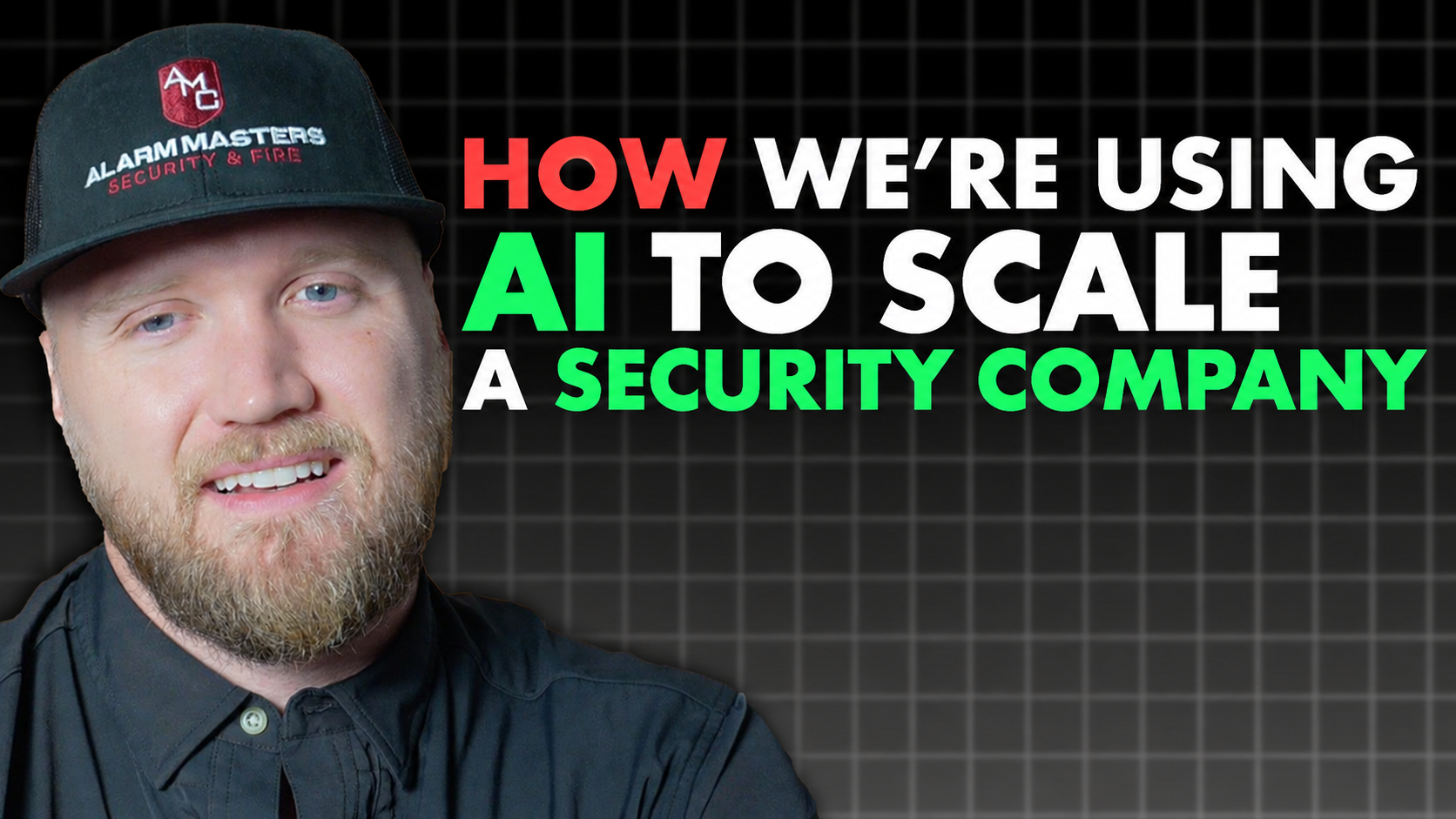
In this episode of Entry & Exit, Stephen Olmon and Collin Trimble explain why AI is becoming the biggest competitive advantage for security integrators. They discuss how operators can use AI to improve efficiency, protect margins, stay ahead of larger competitors, and why becoming "AI native" is no longer optional. They also share the simplest way to start implementing AI in your business today.
In this episode:
→ Why AI won't replace security companies—but will reshape the industry
→ The biggest mistake operators are making today
→ Why smaller companies have an advantage over larger competitors
→ How AI will impact margins and growth
→ The easiest way to start using AI in your business
Connect:
Stephen Olmon — https://x.com/stephenolmon
Collin Trimble — https://x.com/TXAlarmGuy
Owned and Operated
New Episodes Every Wednesday!
Subscribe For More
Is if you are not using AI tools within your business, you will be eliminated.
Disruption is different from like extinction.
But it's the same thing from like six years ago when the technicians they've never marketed, never done sales, and all their competitors are running ads and have field sales guys, and they're wondering why their revenue is going up.
You weren't willing to A deploy AI in your own business and B be kind of like a AI native. Like you think about a kid that grew up with a phone in his pocket versus someone who, when they were 50, the iPhone came out. Like they aren't kind of digital native. Same thing. You've got to be AI native, speak the language.
Welcome to Entry and Exit. My name is Steven Ullman, and I also have Colin Trimble with me, who is my business partner, my co-host, and a friend. We're friends. We're friends. Yeah. I hope we're friends. Yeah, no, good news. Um, and today we're gonna talk about the reality and the concern about AI. Is AI going to kill our business?
Yeah. It feels like we see these are we see these articles all the time. You just said yeah. No, I'm just saying, yeah, that's what we're talking about. Oh. No, it's not gonna kill our business. Yeah, I was concerned. I was gonna save it to the end of the episode to answer so that people would stick around and listen. Now we're just spilling the beans early. Um I feel like I see an article every day about um industries that are most likely to get killed and what are the most resilient, and blah, blah, blah, blah, blah. And and there's there's there's so many of the articles. And the reason there's so much, there's so many is because, and I heard I actually heard this somewhere, that the search volume for this request is through the roof. People are really freaked out. And I'm uh I'm in the camp that they kind of should be. Um, that like it is, if if you don't change and create good skill sets, it's like it's like when the computer came out and started taking over. Like, if you were the guy that like resisted using the computer to do your work and were like, I'm always gonna do it hand by hand or whatever, like you probably got left behind. And they did the computer kill your job, or was that you that didn't do an adapt and change? I don't know. But one thing is absolutely true.
The physical security industry is going to be safe from an elimination, right? So like there are people saying, like, I I actually think this is kind of a I'm not sure I totally buy this take, but like there are people that say, hey, in the future, like radiologists will be fully eliminated. And I don't know. I don't know that that's fully eliminated, but like that is a pretty clear-cut example of probably gonna be a significant shrink. Lawyers also, you know, there's gonna be some areas like that. That's not gonna happen to the physical security industry. But what is gonna happen for sure, without a doubt, is if you are not using AI tools within your business and you are not equipped to sell, install, maintain, and service AI tools that you're selling to your customers, you will be eliminated.
I totally agree.
That's that's the right framing is AI tools that you're selling to your customers, you will be eliminated.
The threat is um not uh keeping up with the kind of shifting landscape. AI is not an existential threat to our industry uh where it's going to inherently put us out of business. Like I think there's certain types of uh traditional digital marketing companies that are gonna get absolutely hammered, right? Yeah, we already named some other good examples. I don't believe that's going to happen in physical physical security. I also don't think uh another you know, everyone wants to talk about AI. The next wave, and this is not investment advice, but the next wave of all this is going to be a continued, absolute just like meteoric rise of conversation around physical robots. Um and I don't think that an AI-enabled robot is gonna get licensed to you know install a fire alarm in an elementary school. Not worried about that. But um you are correct in saying the threat is um not uh keeping up with the kind of shifting landscape. And I think what's gonna happen is from a competitive perspective, um the the companies that are gonna grow and excel are capturing like the gross margin expansion from AI. And maybe overall the industry gets a little price compression, and so you need to have a little higher, you need to kind of build towards that higher gross margin today so you can kind of like stand the test of time and um and and then also you don't want to get outpaced by all your local competitors. And that's right. Um so that is how your business in this industry will get you know kind of decimated, is that you fall way behind and now you know your competitor across town can spend 40% more on growth than you can. Yeah, right.
I I completely agree. And I actually think I think that um it will happen a little faster than people expect it to happen. Uh the the pace of change. And I think that it's gonna surprise some people. And I actually wanna I want to focus on this one point, though. So we've talked a lot about negatives of like if you don't do this, what's gonna happen? If you don't adopt AI and some agree, you're gonna get left behind. That's the simple truth. Is your business gonna go bankrupt day one? No, it's not. But it's the same thing from like six years ago when the technicians that started, you know, this alarm business, they've been around for 25 years, they've never marketed, never done sales, and all their competitors are running ads and have field sales guys, and they're wondering why their revenue is going like this. And it's like, well, you didn't adapt and change. Referrals don't matter anymore. The, you know, like you've got to go out and actually market and do the thing. It's the exact same thing. It's gonna happen slowly and like kind of silently at first. You're just gonna notice it's harder and you're gonna throw more of yourself at the business, and it's not going to return the same amount back to you. And that's because your competitors are doing it at
scale. And here's here's the wild thing that I think a lot of people don't realize. So much of the consolidation that's happening in our space is now like high-end institutional. A lot of the consolidation previously, a lot of these people that were buying up alarm and security integrators were mid-level PE firms. They weren't huge. You didn't have like JP Morgan or Morgan Stanley, a lot of these other ones in there. You had one or two, I think BlackRock has been around with Summit for a while, but like that was maybe 10 years ago. But now what you're seeing is all the big players are entering into this market. A little bit of that is just the natural thing, like they're buying up all physical services businesses, so there's some of that. But why are they doing that? Well, one of the reasons they're doing that is because they know their competition for operational excellence is low. That's right. And they also know that they can have a shared office, back office that is an AI lab internally that's a bunch of really smart people implementing AI across all their physical services businesses. But here's the thing that you don't know, and that's not in the headlines, is yes, they have all that, but it will take them a lot longer to roll that out than it would take you, Mr. or Mrs. Operator, to do it for yourself. So you have this window of opportunity that I'm gonna call 18 months of if you start implementing AI today or in the next 18 month period, you can get some escape velocity that is gonna insulate you and protect you and put you in a better place from a growth perspective. But if you wait until these big boys have rolled out all their really complex AI systems and they've got people, what's gonna happen is they will have so much less overhead that they will be able to price their projects lower than you. And so you will have a hard time keeping up.
That's right.
There is gonna be some margin erosion that I don't know if it's margin erosion. There's gonna be some margin erosion for it not across the industry, but for individual businesses if they don't keep up with AI.
Yeah.
The other thing that's gonna happen along this front, like the solutions are going to continue to get more and more intelligent. And we've kind of talked around this in the past, but you also have to be prepared to speak to all of the ancillary elements of AI, which I think the best example is security, ironically, but more from a cyber security perspective. And so, yes, there's all these like kind of leading edge, bleeding edge solutions, those are going to become more commonplace table stakes over the next handful of years. And so now today everyone's pushing like an AI narrative around their solutions, and to try to stand out three years from now. I actually think you may see like the AI enabled, blah blah blah. Kind of the the phrasing scale back some because everyone does that, so now it's not you're gonna go back to just kind of like the core-based terms for what the solution is because AI is inherently a part of them all. That's right. But you're going to have to be able to speak the language, you're gonna have to be able to explain the difference between um that AI enabled solution and this one, and you know, some you know, what this solution uses some you know frontier model that's underlying and blah blah blah, or this company has their own, and yeah, you're gonna have to be able to speak that language if you don't. That's another reason why you may get left behind, and it could hurt your specific business, not the industry as a whole. Again, I don't think AI is going to uh disruption is different from like uh extinction, you know. Yeah, agree physical security industry is not going extinct, it's gonna keep growing. Do you know anybody that wants to be less safe? I don't uh so people want to be more safe. Um, this industry is gonna keep growing, but where you run a risk uh is your specific business failing or you know, kind of slowly dying off because you weren't willing to a deploy AI in your own business and b be kind of like a uh kind of AI native. Like you think about a kid that grew up with a phone in his pocket versus someone who at when they were 50, the iPhone came out. Like they aren't kind of digital native. Same thing. You've got to be AI native, speak the language.
I think what's really funny is, and then and then we can wrap up here in a second, but I think what's really funny about this is I get uh calls and messages from folks in the industry, and actually folks that are outside the industry that listen to the podcast a lot, that say, Hey man, can I spend 15 minutes with you on the phone to talk to you about how I can get started implementing AI in my business? I basically always respond with, I will give you 15 minutes, but we're not gonna have that conversation. And the reason is if you're asking me that question, that means you're not doing any research on your own because the easiest way to learn about AI is to use and talk to and interact with AI. There's no question that you are gonna ask me about AI that AI cannot answer for you. I have just taken the time to a tremendous amount of time to build and experiment and do stuff with it to figure out what are the limitations and the the guardrails that we that we can play within. And so if you're asking yourself right now, how do I get started? This all seems so overwhelming. Go sign up for a perplexity computer account, not perplexity, perplexity computer. It's a more expensive thing, and start building stuff. And you will start to learn, oh my gosh, this is incredible. This is so awesome. And you'll be able to do a ton of different things. And so that is the best way to start, and then start asking questions and start experimenting and start trying to solve the problem and push back on the AI when it gives you an answer and just learn how to have a conversation with it and learn how to communicate with AI, and then you will be in a place where you are AI peeled and you'll actually be just annoyed that you have to work on other stuff that's not AI related because you're gonna be like, I'm missing the opportunity to do this. And so if you're sitting in that position, go do that. This is not hard.
Yeah.
If you think that's uh just it it takes um some effort and kind of like a reprioritizing to a degree.
Yeah, yeah, yeah, agreed. And it takes a little bit of willingness to spend some time. This isn't like, oh, you want to build software apps, go how go learn how to uh code Python. Like that's so easy. You can just go and take there's online courses to go learn how to Python. That's a huge lift. Uh what's not a huge lift is signing up for Perplexity Computer and saying, hey man, how would I solve for getting more leads in my business? Like, help me think about that. How would I solve for the fact that I've got a lot of attrition and I don't know why, or I do know why, and I want to solve it, but I don't want to hire a human being to do it, or I don't have it in my budget, or like, how do I make it so that my website automatically sends a customer an email every time uh they inbound us on a lead? And I'd like to be able to have something automated. Those are problems and questions you have in your business. Go ask the AI those and let it research and suggest a solution. So um we're gonna talk a lot more about this stuff. We we we're obviously super passionate about it. If you if you don't follow us on LinkedIn, we both post a tremendous amount about AI. And I I try to post as many screenshots as I can. Like I'm really big on you know, the build and public thing. Like I'm building crap and trying it out and putting it online so people can see it. Um so go check it out. And if you want to learn more about this kind of Steve, tell them how people can like learn more.
You can uh subscribe to our YouTube channel, you can subscribe to our newsletter, you can share it with a friend, share it with your mom, show your dog. Your dog might like it. Um and you know, Colin has facial hair, especially, so they might, you know, feel like they recognize a friend. And uh he's got that dog in him, you know. Um, and just you know, leave a comment like big AI guys, you know, something like that. And uh we'll see you on the next one.
.webp)
.png)