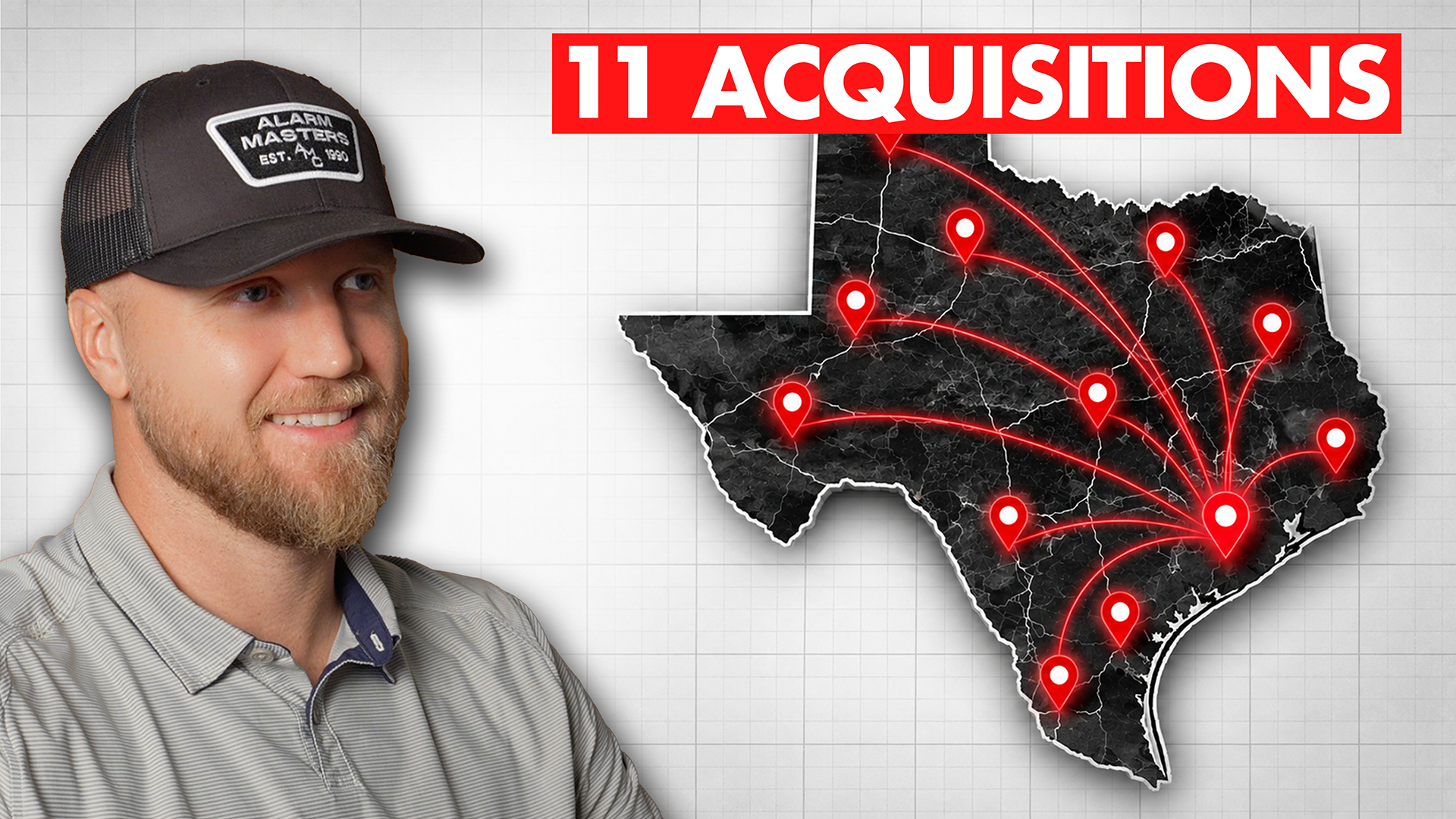


The overview: Scaling a sales team is not about hiring more reps. It is about building a machine that produces predictable revenue.
Most owners treat sales growth like a headcount problem.
Add a salesperson. Add another. Hope production rises.
That is why most sales departments never become durable. They become expensive.
Real scale comes from structure. You build a repeatable playbook, you engineer the right roles around the rep, and you manage the math behind the outcomes.
The best sales teams are not made of superstars. They are built like systems.
The details: Most companies fail at sales scale because they hire before they have proof.
They assume the salesperson will create the system.
Find leads. Build pipeline. Quote work. Close deals. Manage follow-up. Own retention. Hit quota.
That is not a sales strategy. That is a job description for three people.
The company must build the framework that generates demand. The salesperson executes the play. They do not invent it.
Once the framework exists, scaling becomes logical. Without it, every hire adds risk.
Think about it this way:
- Scale through proof, not optimism: If your first rep cannot hit quota, the solution is not a second rep. It is replacing the rep or fixing the process.
- Scale with coverage math, not vibes: Quotas should be set based on fully burdened rep cost. They reference a standard range: 3–5x OTE coverage.
- Scale by segmenting roles: Full-cycle sales is hard to replicate. Segment quoting, SDR, appointment setting, and admin work so the rep stays high-output.
- Scale by managing leading indicators: Pipeline math, close rates, activity levels, deal size, and conversion rates should make results predictable long before month-end.
- Scale through face-to-face advantage: Their strongest belief is that deals get won in person. More face time increases win rates and reduces attrition because it surfaces issues early.
- Scale by aligning your sales process to your value prop: You cannot scale if your reps don’t know why you win. Alarm Masters wins through experience, not lowest price and not most engineered work.
Scaling sales is not hiring people and hoping. Instead, focus on building a machine that removes mystery from results.
What comes next:
- Prove the playbook before hiring headcount: Your first rep must demonstrate consistent, repeatable quota attainment before you stack more reps.
- Set quota using burdened-cost math: Work backwards from fully loaded rep cost, margins, and capacity. Don’t guess quota. Engineer it.
- Segment roles to increase throughput: Stop making field reps quote, qualify, schedule, and chase admin. Build support roles so the rep spends time in front of customers.
- Build KPI dashboards that eliminate surprises: Track pipeline coverage, close rate, average deal size, lead-to-opportunity conversion, and sales cycle length. Treat sales like math.
- Design the calendar around face-to-face meetings: Make meetings the product. Everything else is support. Reps should wake up with a week already built.
- Codify your value proposition into scripts and steps: If you win on experience, your discovery, follow-up, check-ins, and handoff should prove it at every step.
- Replace non-buy-in reps fast: If the process works and the rep won’t follow it, you don’t wait a year. Their guidance is blunt: three to four months is enough.
Why it matters: Most companies don’t have a sales system. They have a salesperson.
That works until:
- The rep quits
- The market tightens
- Lead flow changes
- Deals slow down
- Price pressure rises
- The owner gets dragged back into selling
A salesperson is not scalable.
A sales machine is.
When you build sales like a system, you create leverage:
- Predictable revenue instead of “good months” and “bad months”
- Repeatable hiring because the playbook trains the rep
- Higher output per rep because support roles remove friction
- Better customer retention because reps stay close to the install base
- Cleaner expansion after acquisitions because the system can be redeployed
The long-term winners are not the companies with the most reps.
They are the companies that build the cleanest, most repeatable sales engine.

.webp)
.png)