

Most operators think scaling comes down to process. But the real unlock is talent.
In this episode of Founder’s Story, Stephen Olmon and Collin Trimble break down the lessons from year two of operating Alarm Masters — including the leadership hires that changed the company, the painful acquisition lessons they learned, and why investing ahead of growth became their biggest advantage.
They share why A players outperform entire teams of average talent, how building stronger operational structure transformed the business, and the acquisition mistakes that forced them to rethink diligence, integration, and growth strategy.
Inside this episode:
→ Why one A player outperforms two B players
→ Hiring a sales manager earlier than expected
→ Building accountability and structure across operations
→ What great operators actually do differently
→ The importance of humility in leadership hires
→ Lessons learned from successful and failed acquisitions
🔗 More Entry & Exit — https://www.entryandexit.co/
Connect:
Stephen Olmon — http://x.com/stephenolmon
Collin Trimble — https://x.com/TXAlarmGuy
Owned and Operated
New Episodes Every Wednesday!
Subscribe For More
We hired someone who was kind of industry adjacent, knowledgeable about certain parts. Yeah, they work for a manufacturer. Right, but I don't think you could spell fire. The talent far outweighed lack of knowledge or context.
That initial director of ops set the playbook. Here's the goal. This is how we're gonna get here. This is the goalpost. Here's where we are today. Here's how we're gonna get there. If you hire a player, you have a goal that's actually attainable, you know where you are today, and you give incentives to the employees to get to those goals. It's wild.
It actually works. When I think about director of ops, like there's not, they're not like bringing ego. You know, it's like the talented diva. They're so great, but like he's a little rough around the edges, he's kind of abrasive, he's kind of
classes. I'm starting with it. So ridiculous. I know I'm starting with it. I'm starting with it. Welcome to entry and exit. My name is Steven Ullman, and I also have Colin Trimble with me, my very handsome co-host and business partner. And today we are going to continue our founder series. Oh, sorry, I have glasses on.
Oh, if we're taking silly things off our face, let's just the glasses take that off. I look cool. Take that off, too.
Um if you're just listening to this, just know that we are fun.
Um that's what a dad would say. We're fun guys. If you have to tell somebody that you're fun, you're not fun.
By the way, if I haven't announced it on the podcast, the Ullmans are having another baby, number four. So, you know, I'm full dad mode over here.
Um, we are continuing on our founder series, and we're talking about kind of the full year two. And there's kind of three main buckets of things that we're gonna talk about, but really I would kind of summarize year two that for that kind of full second year as maturity. Like we started to really grow up.
Yeah.
Yeah, I think we learned a lot of things. If you've listened to past episodes, you know that we tried to take B level talent and add A plus level process to solve problems in our business, and that didn't work. Um so we have really in in 2025 kind of figured out that wow, we've got to hire the best possible people and make the investment in that. And that might mean hire few hire fewer people and hire just absolute all-stars that are doing more than one person. Like one A player is better than two B players.
100%.
And that seems counterintuitive. It's like, yeah, but if I could just hand off a bunch of stuff to a bunch of B players, like there's 80 hours a week versus 50 hours a week from an A player. It's like, no, what an A player can get done in 40 hours is so much more valuable than what a B player can get. Two B players can get done in 80 hours.
I think it's how much they can get done, but also the level of trust, you know, like that you can depend on them. Um, and you aren't you don't feel like you're constantly having to hand hold is just a huge night and day difference.
I think we should highlight where we hired some A players, um, and like where we hired some some key talent. So
we hired a sales manager. Uh we talked about this in the past, but like that we thought that was gonna be like the last freaking role we would hire for because uh I am so OCD about sales, and I still am. And that ended up being one of our biggest unlocks um because it provided uh it created talent duplication below the sales manager faster. So we hired three reps all within like a kind of a 60-day period, and they were ramped significantly faster than when I hired our first rep. It really took that first rep that was I was responsible for 60 days. And I don't think it was a massive talent difference. I think that it was a they had a manager that was with them 24-7, guiding them, yeah, getting them up to speed. And that really made a huge difference for us and paid dividends way more than the salary of the of the sales manager was recouped just in their ability to enable our reps. And so hiring a sales manager was huge. We were pretty small, like we we were pretty small to have a sales manager at the at the time. Yeah, and now we have reaped the benefit and we're gonna have a another banner year because the sales team is really maturing. And I think that was the big one of the big storylines from 2025, right? It's like we honed in on the sales process, figured out the levers to pull, really figured out where to place our chips, hired some amazing people, hired a great sales manager, and we didn't skip, we didn't skip on it. And just by the way, this is a hot take. Uh, I love to hire salespeople outside the industry.
Yeah. I think it is overvalued in most industries. There's a few, I can think of a couple industries where you kind of, or or even scenarios of a certain size company where you have to have the industry experience where it's like so predicated on relationship and credibility, um, you know, where it's like a super tight-knit community, blah, blah, blah. But for us, uh, we hired someone who was kind of industry adjacent. They weren't directly in it, um, knowledgeable, at least knowledgeable about certain parts of the work for a manufacturer.
Yeah, yeah, they they worked at at one our at our uh video manufacturer.
Right, but I don't think he could spell fire, you know. So Yeah, well is that a dyslexic joke? No, it's just a metaphor. Um, and so in that scenario, the talent far outweighed lack of knowledge or context.
Yeah. Yeah. No, I agree with you. And I think that that that played a huge uh benefit to us at uh towards the end of this, towards the end of 2025 and now into 2026. Like we have seen so much growth and maturity in our sales process, accountability, just like the day-to-day minutiae of I had a conversation with him yesterday. He was like, hey man, I was looking through all the pipeline. I was figuring out why our pipe generation number dipped last week. I was going through, I talked to every sales guy, had a one-on-one with them, and got some really interesting feedback about things that are kind of like time vampires and they're weak that we can easily solve for.
Yeah.
And I was like, great, let's sit down and figure out how we can unlock these guys. So just an example of great management, creating great folks below them on their team.
Yeah. Um where else? Where else did we add a super uh important, kind of more talented, maybe, maybe even a little more expensive, you know, than we had originally budgeted for?
Yeah, we hired a director of ops um in the first part of last of last year in 25. And what I think one storyline related to this, and we're gonna kind of get to this in a second, but we created more structure across the whole organization, like levels within the organization, a little earlier than maybe most companies would do that. Um, and I'm glad we did. And in operations, it was hugely important. And we hired a guy that um came in and owned projects, did all the project management, totally rewrote our entire project process, how we forecast, how we do manpower planning, uh, how we think about buying and purchasing materials, how we uh and so he really kind of started there, focused all of his attention, and then moved on into service and really started focusing on how do we expand and grow the service department, and then hired another a player, a service manager for that department, and an A player in our project installation manager, and enabled those guys to be thinking like owners so that they were continuing the playbook. But really, that initial director of ops set the playbook. He said, Hey, here's here's the goal. This is how we're gonna get here. This is the goalpost, here's where we are today, here's how we're gonna get there, here's the KPIs related to that, here's how you're gonna be incentivized to do that. It is pretty wild. If you hire a players, you have a goal that's actually attainable, you know where you are today, and you give incentives to the employees to get to those goals. It's wild. It actually works. Yep. Like people are motivated, you give them a goal, not just for money, which does certainly help. You, I mean, like I love paying our employees bonuses for performance. Um, but just giving everybody a common goal, like here's where we are. One of the things we do is we're trying to, we have a really aggressive monthly uh service goal every every month. And we do something um every month to figure out what is gonna keep us from getting to that service goal this month. We think about it every week. Do a sales service meeting and we say, what's gonna keep us from getting to our goal? Where are we on a daily rate, on a weekly rate, on a bi-monthly rate? What is going to keep us to get our goal and what can we do about it today to make sure that we don't end up at the last day of the month surprised or upset that we didn't get to our goal?
That's right. One other uh I think key trait of people that we have hired that I I actually think is kind of underrated or not talked enough about in business is humility. You know, like when I think about director of ops, like or you know, our sales manager, there's not they're not like bringing ego to the table. Where he's like, man, you know, it's like the talented diva. It's like, oh man, they're so great, but like he's a little rough around the edges, he's kind of abrasive, he's kind of a jerk, you know, he he kind of toots his own horn, he wants credit and credit all the time. We've hired people who are genuinely pretty humble and are like can understand if they made a mistake and talk through it and work on it. And I think that's just a massive characteristic of really great, you know, kind of when you're trying to build your leadership team. Um, and we've been fortunate in that regard.
Yeah, it's it's it's huge. Like the fact that I I feel comfortable being able to give constructive criticism or feedback, knowing that like it's not gonna hurt their feeling, like they want it and they own it and they agree with it. And like I had to have a conversation with our director of ops last week about something that I was just like, hey man, we gotta talk about this. This is like this thing's not working, we're not communicating on this particular issue. And it's like, yeah, you're right, totally 100% loud and clear. I'm not, I'm not doing the thing you're asking me to do. I should have been doing it. I take full ownership, here's how I'm gonna change it. And then it changed. And it's like uh that's so refreshing. Like the sky is the limit when you have that type of talent, you know, and so the goal is how do you get everybody to be an A player? Uh, not everybody comes in as an A player, and sometimes you have to develop them into being an A player, and that's obviously the the role, the job of a manager and a leader of a business.
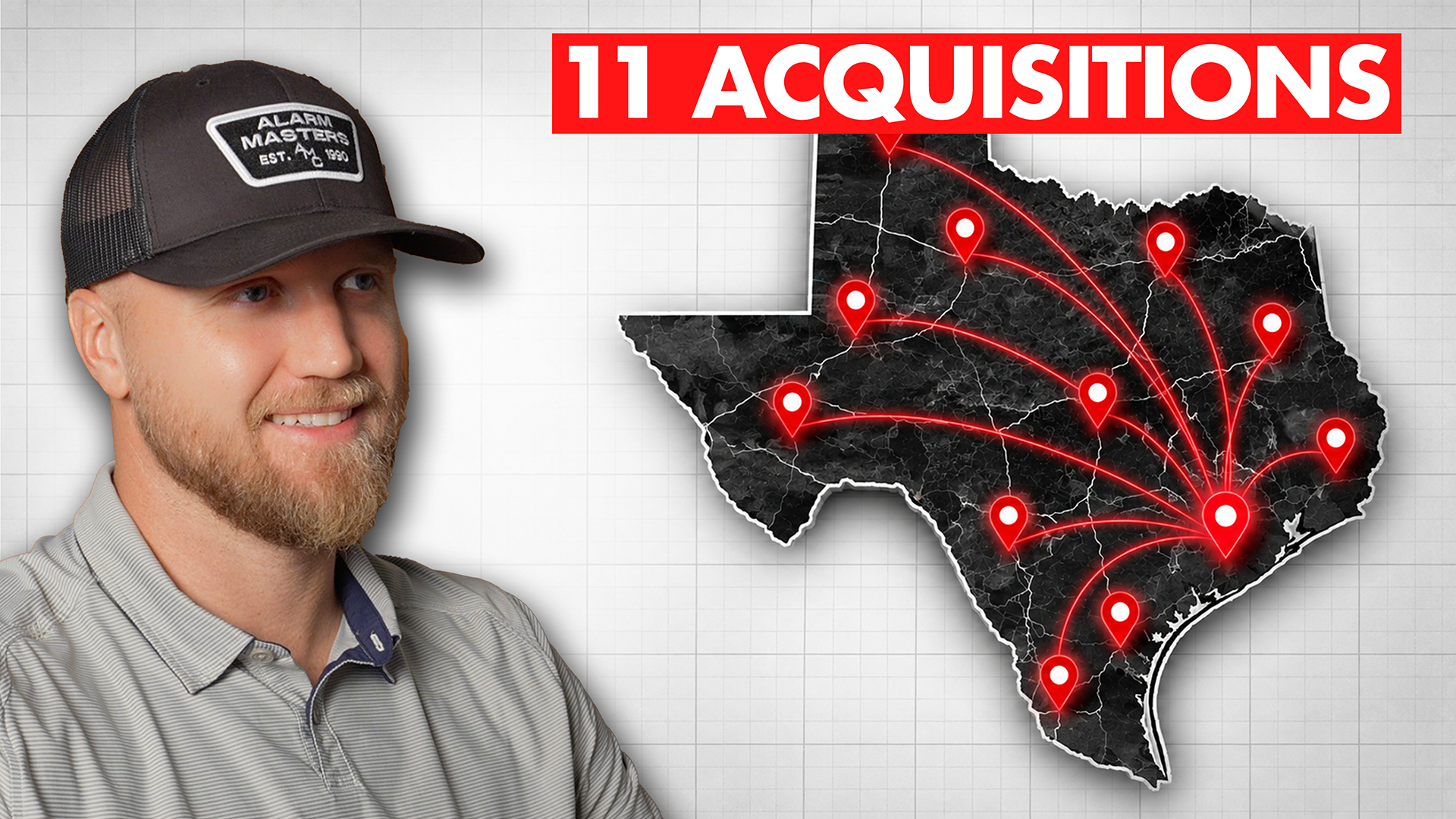
Um, the other thing I want to highlight, so switching off of like talent and structure is acquisitions. We had some big acquisitions in 2025, really kind of the tail end of 2024, and then going into 2025. So we had two really big acquisitions at the end of 24, literally the last month, and then we had a bunch of smaller acquisitions in 2025, and it was all degrees of success. Like uh, we had some that were knocked out of the park, really great, huge ROI for our business, really great uh retainment of the employees or sorry, of the of the customer base, and then we had some that were not great. Um, that we had a lot of attrition, a lot of miscommunication, uh, didn't didn't have a fantastic experience on handoff from the previous owner. And it was just it was dirty and it was hard and it was messy and not everything was clean and there was no SOPs. And it's like, where do we find this information? And yeah, there, and there was some that was like, dang, this is like a hand and glove. Like they do service the way we do service. They charge the same rates. In fact, they were slightly higher so that the customers were pleasantly surprised when their you know service rates went down. And so we got all aspects of that, and I think that that really set the playbook for us because towards the tail end of 25 and now into 2026, we're doing bigger, more often, and just significantly larger, more complex acquisitions now. Yeah, and those playbook of what we did in 25 informed what we're doing now. Like we know what to watch for, we know the questions to ask, we know what to be prepared on day of close. That that was foundational. And and if if you haven't listened to us before, like we are dead set on combining organic sales marketing with inorganic growth. We are gonna do both. We're gonna acquire and we're gonna grow.
Yeah, the one of the specific things that jumps out to me is that we have learned through pain and through success uh how to better evaluate acquisitions. Um both both in the kind of initial interest and understanding like I can think of a phone call that you made to me a couple months ago, and it was like wow, we need to jump on this right now, versus okay, well, you know, let's let's have a meeting, let's take a look. Like, I'm not, you know, jumping out of my chair, but um, I think we've gotten better at understanding what to be pretty excited and urgent on, versus and then also even the next step in of what we really want to harp on in due diligence, kind of the non-negotiables of diligence. And some of those things are non-obvious, um, and it just takes getting punched in the mouth. Um, and and even like there's one specific thing uh that is like an industry standard practice, which uh specifically is on um auditing contracts, where what's kind of a accepted norm is to take a sample 10-20% and we would say that that's a terrible idea because of yeah uh just because uh circumstantially this a sample on a deal actually totally did not represent um the the whole. And so now we look at every single freaking contract, right? So there's just these things that you learn over the course of time and kind of on the theme of maturation, you know, yeah on the acquisition side, you know, we've matured too.
Yeah, totally agree. No, I I couldn't agree with that more. Um, and and being more skeptical in general is just like not being desperate for a deal. Like yeah, we're super skeptical. We got really excited early and just because we were excited. We was new and fun and awesome. And I and and I I'll say this we by the grace of God, we have not had any failed acquisitions where it was like, wow, that hurt us more than it helped us. Thankfully, we were able to uh get through some of these and kind of turn some lemons into some lemonade a little bit to make to make them a net benefit to the business. But yeah, so I would say 2025 characterized by talent, building out structure in the organization and organ inorganic growth. And I think I would just say to anybody listening to this, like my hot take on this is you need to invest forward into where you want to be. And so if you want to be really good and you want to have a great sales team, invest into more than you think. If you if you want to hire a good salesperson and you and you can afford it, hire two salespeople because one maybe won't work out. And and honestly, if you believe in your sales process and it's a dollar in, two dollars out, then then two is great, right? Like so you got to kind of invest forward. And and again, this is I'll end on this. I think our industry, especially owner operators that have kind of built this thing from the ground up. One really tough thing is hey, I make a salary every year and I take X distribution every year. And you may be reticent to invest back into your business. I would encourage you to invest back into your business, especially with the draws that you take at the end of the year. Like uh get comfortable taking a little less money out of your business at the beginning, at the end of every year, and reinvest some of that into your business so you can grow and then you'll see that growth return back to you. You don't do that every year, but probably every other year, you should really start to think about reinvesting a certain amount of dollars back into the business. Um, if you like this content, we would appreciate a like or subscribe. We'd also we gotta we got a note this week. Shout out Tony for giving us some podcast episode ideas. Tony, Tony Um, and so we're gonna do that. So he he sent us a couple ideas for some pods. We're gonna we added them to the backlog, we're gonna record them. Um so we'd love to hear that. If you have anything, hit us up at infotentryxit.co. We'd love to hear that. We appreciate you listening.
Bye.
.webp)
.png)