

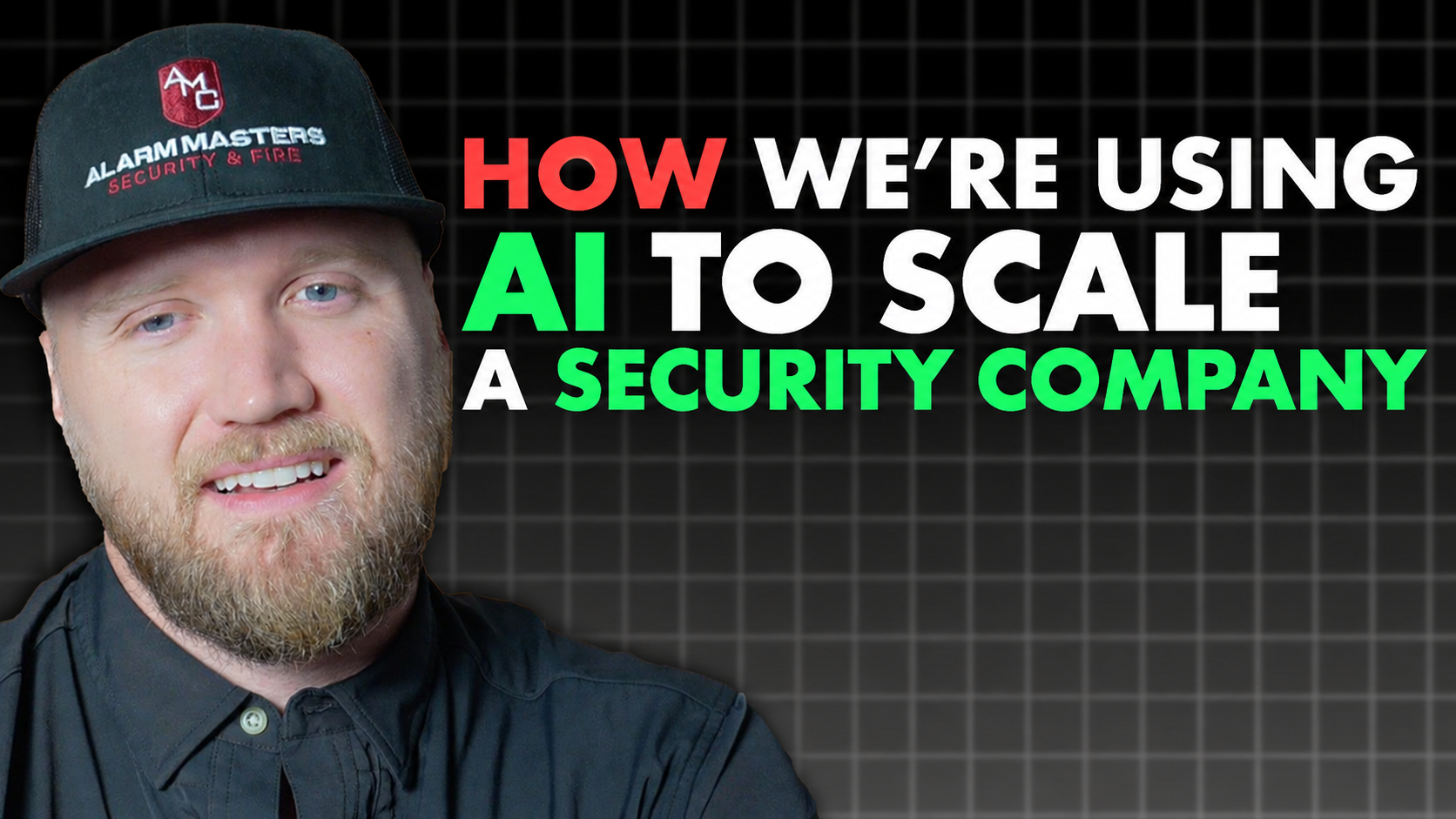
Everyone is talking about AI sales agents—but most of the hype doesn't match reality.
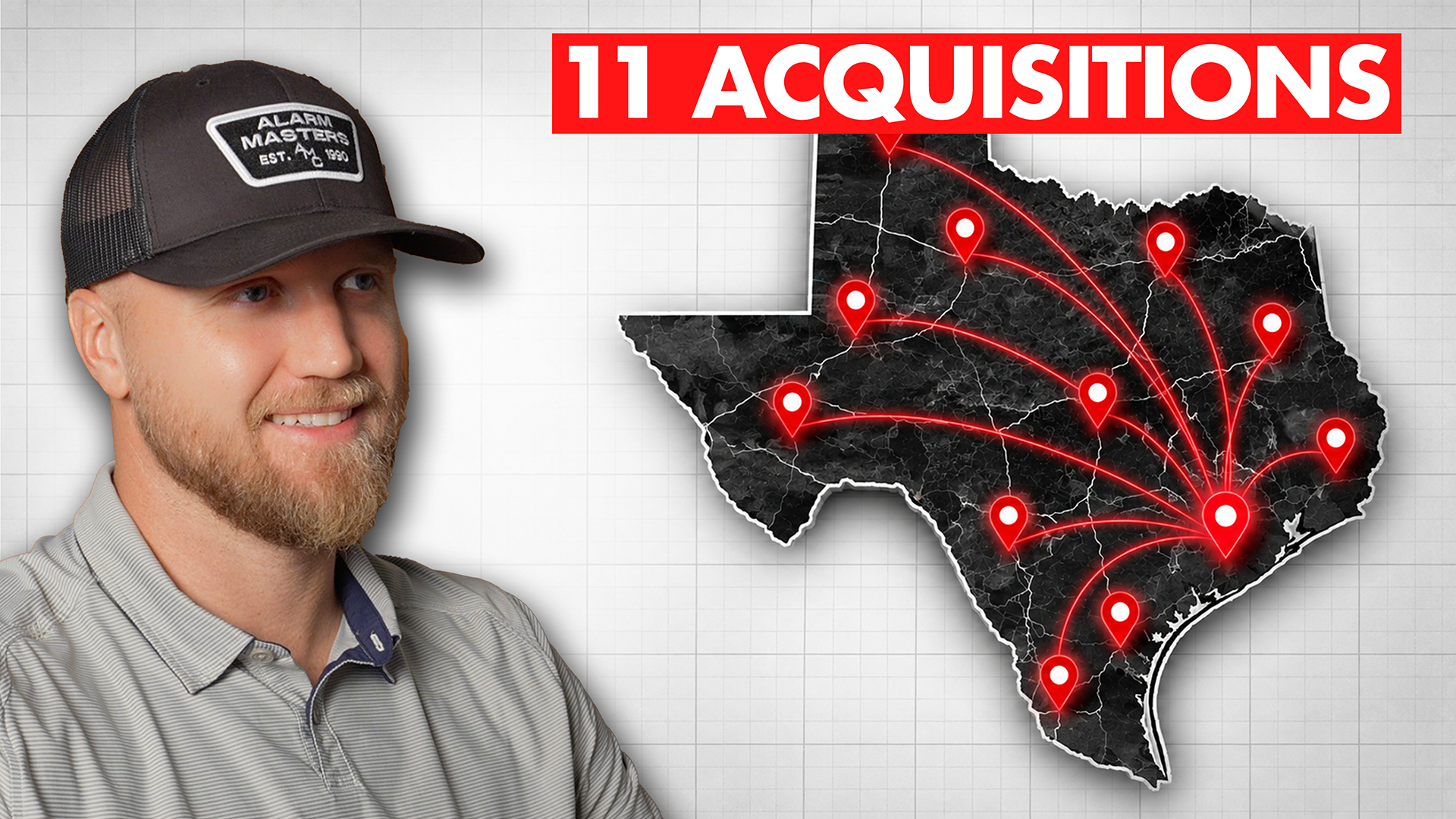
In this episode of Entry & Exit, Stephen Olmon and Collin Trimble share how they're actually using AI at Alarm Masters to find buying signals, generate leads, and automate parts of their outbound sales process. They break down the tools, workflows, and lessons they've learned while building AI-powered systems that create real sales opportunities.
In this episode:
→ Why most AI SDR claims are overhyped
→ Finding buying signals with public data
→ Building AI-powered lead generation workflows
→ Automating prospecting and outreach
→ Tools and tactics operators can use today
Connect:
Stephen Olmon — https://x.com/stephenolmon
Collin Trimble — https://x.com/TXAlarmGuy
Owned and Operated
New Episodes Every Wednesday!
Subscribe For More
There's a lot of stuff where you'll see where it's like download these 10 clot prompts. You have a fully built SDR. That is fake news. That doesn't exist. How does an agent or even a human know when to take an action on one specific prospect opportunity versus another? We're building kind of an open source one and putting our kind of special thoughts on top of it. And it basically is building what I just tested in Claude at scale. You're not going to get an SDR agent by using us Claude subscription. You're not going to.
Yeah, I think this is sort of an over sensationalized topic on the internet. And I don't want to toot my own horn because I'm not A plus at a lot of things, but I think AI and sales, I think I've got an A plus on my report card. Toot away. And so I would just say this there's a lot of um bluster that exists on the internet, and it's really not consumable. And I think that there's um things you can build yourself, there's things that you can purchase. There's a lot of different things. And what I want to get really hyper-specific on are tools that'll help you close more deals and really find more leads is kind of what I want to focus on. And I you have to step back a little bit from a sales perspective before you really dig into this to say, like, what are you trying to find more leads in? You know, like are you just trying to find contact information from people that are in, like if you're a commercial business or you're you're pursuing commercial businesses, you're just trying to find you don't need an AI agent for that. You can use Zoom Info or Apollo and they and they can do that for you. Um, are you looking for um compelling events? So that would be like, I want to know every time, like in the real estate world, like, hey, every time somebody sells their home, uh, if you're a residential security person, that would be a signal or a compelling event for reaching out to um, you know, the new owner dropping by because they probably haven't gotten a you know a new system installer activated yet. So those are those are signals and compelling events. And then there's also tools around engaging customers. So how are you gonna reach out to that customer? Uh are you gonna email them? Are you gonna call them? Who's doing that? Is that an SDR outsourced? You know, is that some internal, somebody outsourced, is that an AI agent? So I think it's kind of important to like break down that for you as a company. We can't do that for you, you have to do that for you. But I I can share how we think about it and like kind of walk you through my mental path of uh what is our compelling event, what is our target category, and how are we reaching out to them? And what tools are we using to assist with that? You think that's a good starting point? I think it is, and and what I'll say before you dive in is this for us has been iterative. Like it's not like we just started doing this and it was perfect straight out the gate. Um, it's been a handful of months where we've tried certain things, we've changed our approach, we've added more things into the mix. So I do think if you're currently um needing to develop leads um at a higher you know volume and you have a sense for your ICP, like some of these things you need your building blocks first if you don't have them. But we're kind of gonna speak to people that may we're kind of assuming hey, you know your ICP, you've got a really you know uh pretty clear target, you know, from industries or verticals, that sort of thing. And so from there, you know, we'll we'll dive in. Yeah. So so I'll kind of tell you about how the journey we went down, and I can then we'll we'll sort of talk about the tools. The first thing I want to say uh holistically about AI is like there's a lot of stuff where you'll see where it's like download these 10 claud prompts and you can go, you have a fully built SDR. That is fake news that doesn't exist. Your Claude chat agent out of the box is not gonna do multi-step, multi-turn, multi-tool calling that you need to be able to do an SDR agent. It's not gonna happen. It can write copy for you. It can even, in some cases, depending on the connectors, send in a one-off email for you. Uh, it can it can do some level of web scraping, not a ton. And so it's powerful. Um, you're not going to get an SDR agent by using a Claude subscription. You're not going to. And there are a lot of tools that exist out there today that are doing um all different parts of what I just shared out of the box, like in a package. But we built a lot of this ourselves. And I'll share those tools with you and kind of how we're doing this. And if you want to learn more, hit us up or put it in the comments and we'll we'll share more in depth. We're gonna kind of give a cursory, you know, look at it.
So the first thing we think about is like we're really targeting uh senior living facilities. And so we love senior living, independent living, assisted living, all the senior living facilities. We think that that's a great target market. We think it's recession proofed. We think that the world's gonna continue to make elderly people and we want to support that market. And we love it. We've had a lot of great and successful projects in that market. So that's an ideal client profile for us, right? And so then the next point is who is the contact in that IP? And sorry, that's a key industry. Who's the ICP, the key contact? Well, that's the executive director for us. So the executive director runs the property, is fully responsible for the PL. They wear a lot of different hats, but they ultimately make the decisions for that property up to a certain amount. So I know my industry, I know my ICP. And then the next thing is is like, how do I want to contact them? Well, cold calling is tough. You're basically gonna get gatekeepered, and you're not gonna really be able to, so it's it's a drop-in or it's a it's a it's an it's an email. And so we like drop-ins and emails. Um, we like both. And so, what is a compelling event for us? So, a compelling event would be hey, what is something that would necessitate them needing a security upgrade, retrofit, or renovation? There's a lot, but what you're trying to find is what's actually available from open sources. Uh, and so open sources would be public data. And if you subscribe to like Zoom Info or something like that, those are like 95% of the engine behind those is two things public data or what they call inference, right? So if they know that Colin is Colin at the Alarmmasters.com, then they can guess that Steven is probably Steven at the Alarmmasters.com. And they can actually send a little test ping to that email to see if it goes through. Now they know your email address, and you're paying them for that. That's essentially what Zoom Info does. Um, you can build an AI agent to do that. Um, you can do that yourself, right? So
what we're doing is we're building an AI agent and is to find publicly available data. Well, there's some really crazy available data out there about senior living because it's highly licensed and uh has lots of code around it. And it will surface executive director names and numbers and dates, and and then you can go and run a scrape on that with an AI tool to surface fresh executive director contacts in the multifamily space that have a compliance or code infraction. In fact, Steven, you built one recently as a test pilot that was sort of the impetus behind this of citations related to fire alarm and fire sprinkler. Yeah, correct. Yeah, so it just runs on a weekly basis checking a couple different publicly available data sources for citations for I think there's three or four different facility types in the state of Texas, focus on a couple specific markets, and you know, whenever something meets that criteria, it automatically sends an email or basically creates a bleed for our sales team to go chase. Yeah. Super cool. Um, you can do this yourself. So the first thing you need to figure out is I identify your market, identify your ideal client profile, and then you should use Claude Chat for this, which is research. And it's basically to say, hey, uh here is some compelling events that typically trigger my uh buying situation for me. And here's the contact role that I typically see. And what's great about uh senior living is the contact structures are usually about there's always an executive director, basically. So it's not like you go to a medium-sized business, it's like there's a president or a CEO or an owner or a principal or a partner or a general manager. It's like there's so many titles for it's just ambiguous. It's not ambiguous in senior living. So that's part of the reason we picked that. You can tell Claude, hey, I want you to go research open sources for me around independent or senior living for executive directors and compelling events. Where can you find open public data that might be relevant to me? Go please find those sources. And if possible, please go find me one as an example so I can see the quality of the information. And then what you have is a proof of concept. So I would just tell you first and foremost where you're starting, go build that proof of concept. You can use Claude chat or ChatGPT chat, and it can go do that for you. Then you need to sort of build an engine behind that. There are a lot of tools out there that can do this for you. You can Google this, hit us up in the chat, and we can give you a couple of recommendations. We're building kind of an open source one and putting our kind of special sauce on top of it. And it basically is building what I just tested in chat in Claude at scale, right? Right. And then it's driving that into our CRM that we talk about all the time. And then from there, we build another agent that basically sits on top of our email client, which is basically Salesforce again, and it will create email campaigns that are designed for that compelling event. So in this case, if there's an executive director change at a facility, it's going to create a templated email that is directed to that compelling event. And so the whole pipeline looks like open to open data comes up, enrich the source and find the content information, write the email, send the email, and then when they respond, our human, you know, SDR takes over and books that appointment for us. One one really quick thing to add, uh, we're talking a lot about open data sources. You may have your own proprietary data that you have purchased, like there's a lot of data sets you can purchase, or uh you have just gathered it over the course of time. Um the benefit or something to just think about is that compelling event, you know, is what's a trigger? Like, how does an agent or even a human know when to take an action on one specific prospect or opportun opportunity versus another? So that's why we're kind of harping on the public data, because when data sets update that could kind of opportunistically mean that there is some change in status or update that we could take action on uh that helps us prioritize. Because we, you know, you can't uh outbound to the infinity. And so there is a bit of how do I focus and um because you know, even if we had a million uh qualified leads, like we don't have that many sales reps. So you have to just think about your current reality um and find ways to prioritize. So that's that's one reason also why we're focused on public data. Yeah, and
I would just say like you can baby step this, right? So, like if this were me, I would sign up for like what and we do. We have a subscription to Apollo, and uh there's some reasons why we subscribe to Apollo and we have an enrichment agent um that are kind of too technical to talk about on this podcast. But I would get that, I'd get an email campaign tool that's super easy that has an open API. And then I would just do research on Claude. Like if you are or ChatGPT or whatever your favorite tool is, I well, I have a friend, Stephen, that built this is how easy it is. So I have a friend who's a banker, not technical at all. And he was really trying to get focused on he wanted an app that would hold him accountable and surface a workout for him. And so he built a web app that would send him an email every day that he would click a link and it would take him through a screenful of like, here's the exercises you're doing, you got to check in, put in the number of reps, and then it like clocks his accountability. And if he doesn't check it in by a certain time of the day, it starts sending him text messages and emails to remind him, like, you got to do this, you got to do this. And he just typed all this in in natural language, it built the full app for him. And it was like pretty slick on the first pass. Like he didn't know anything about software. So the point is, is like that is more complicated than scraping publicly available data sources at scale. What you really have to get focused on is what do I want? Like, what industry am I pursuing? What is the role I'm pursuing in? What are a couple compelling events? Or maybe you don't know a compelling event. Maybe you just want more leads in a given industry. You could go and source that, right? Like you can just ask Claude to go do little test samples of some of this. No, I I think it would be good um just to maybe one layer deeper on a couple specific tools that we're using just to kind of you know tie it together. Yeah, so we are using an open source tool that's and by open source I mean like it is an application that exists on the internet that is free and it's a code base, and it's called GitHub. And so on GitHub, it's called uh Hermes Agent. There's a lot. Claude has one called Claude Managed Agent. You can use that. You can actually kind of hack around this using like Claude Code, you could use perplexity computer. If you're like gonna do it, especially in the like early days where you're kind of testing stuff out, that's where I would say like play in their sandbox. We're crushing hundreds and thousands of leads a day in scraping and enriching. And so, like, it gets expensive to do that in Claude Code and in Perplexity. But basically, if you've got perplexity computer or Claude Code, what it's doing is it's spinning up a virtual computer for you, and you can it will write an application and deploy that application into that virtual computer or sometimes physical computer, and then do a thing. Right. So, like you could say, Claude Code, I want you to go write an app that goes and scans this public data, like new building permits. I want to know new building permits. I want to know. Here's another just interesting one that I had a friend that it's like they look at out uh what what's like the a liquor license? That's what it's called. And so they want to know every time somebody is applying for a liquor license, that's usually like the earliest license people apply for for a restaurant. So they were going outbound on those. And so you could say, hey, uh, I want you to go run a scrape on this and find me all liquor licenses at the beginning of every day. And then then you go use Apollo, take it onto a spreadsheet and put it. Then you could figure out, okay, well, that's kind of a waste. Now, could I connect Cloud Code to Apollo via API? Yeah, you sure can. And you could ask Cloud Code how to do that, and then they'll connect and it'll enrich it for you. Yeah. So, like that's where things get if you're asking the question out loud. I wonder if I could do XYZ. The answer now, today, is probably yes. Yeah. You know, outside of some data source that is private that you, you know, uh aren't gonna go hack because we have integrity listeners. Um but outside of that, the world's your oyster. Like you probably can build the thing, run the process, automate it in the background, scale your outbounds, scale, you know, all these different customer touch points or prospect touch points. Um, you just have to spend the time to do it, kind of get familiar, do the little wade into the waters. And over the course of time, which for us really only been on this side of the house, you know, four or five months, yeah, you're gonna be way further along than you would have expected. Yeah. Let
me just say this last thing about a tool that I want to call out that I think is is kind of slept on and not really used, but it's really an ideal sales tool. It's like a just beginner, it will get expensive at scale. And so what you use in the beginning will probably not be what you will use at scale. But Claude Co, or sorry, Claude Co-Work is a multi-step uh kind of like mix between Claude Chat and Claude Code. It's kind of like a middle ground for you, and it can do multiple things. So you could say, go to find available web source, go pull a lead, go run it through Apollo, and it probably has a native connector to Apollo, find me the lead, put it in a spreadsheet, and then email that cut these leads with this template. And and it will do that. Now, if once you start getting over a couple dozen a day, then it's gonna, you're gonna get you're gonna get tapped out. You're gonna really need to either build or or kind of do that in another place because it's not built for hundreds of records of scale. But that is a great testing ground of I wonder if I could do this thing. Like how, but you've got to think about like you're talking to an employee, like you just hired an employee and they know how to work a computer really well, but they don't know anything about your industry. If you were gonna train that person, how would you talk to them? Talk to Claude Cowork and you'll be in a good spot. Yeah. I totally agree. We I really like the phrase digital employee, and you have to give it the context. We started out, you know, teaching uh, you know, these platforms about our business and our industry first, you know, so that it had some frame of reference for what we were doing. So if this has been helpful, um then, you know, like, subscribe, follow along. We're gonna do more of these types of videos. So, you know, if there's anything specific that you want to ask questions about or you're interested in maybe a more kind of AI specific episode on a on a topic that would be helpful, let us know. And uh, we'll see you on the next one. Thanks.
.webp)
.png)