

Paid ads can be one of the fastest ways to grow a security company—or one of the fastest ways to waste money.
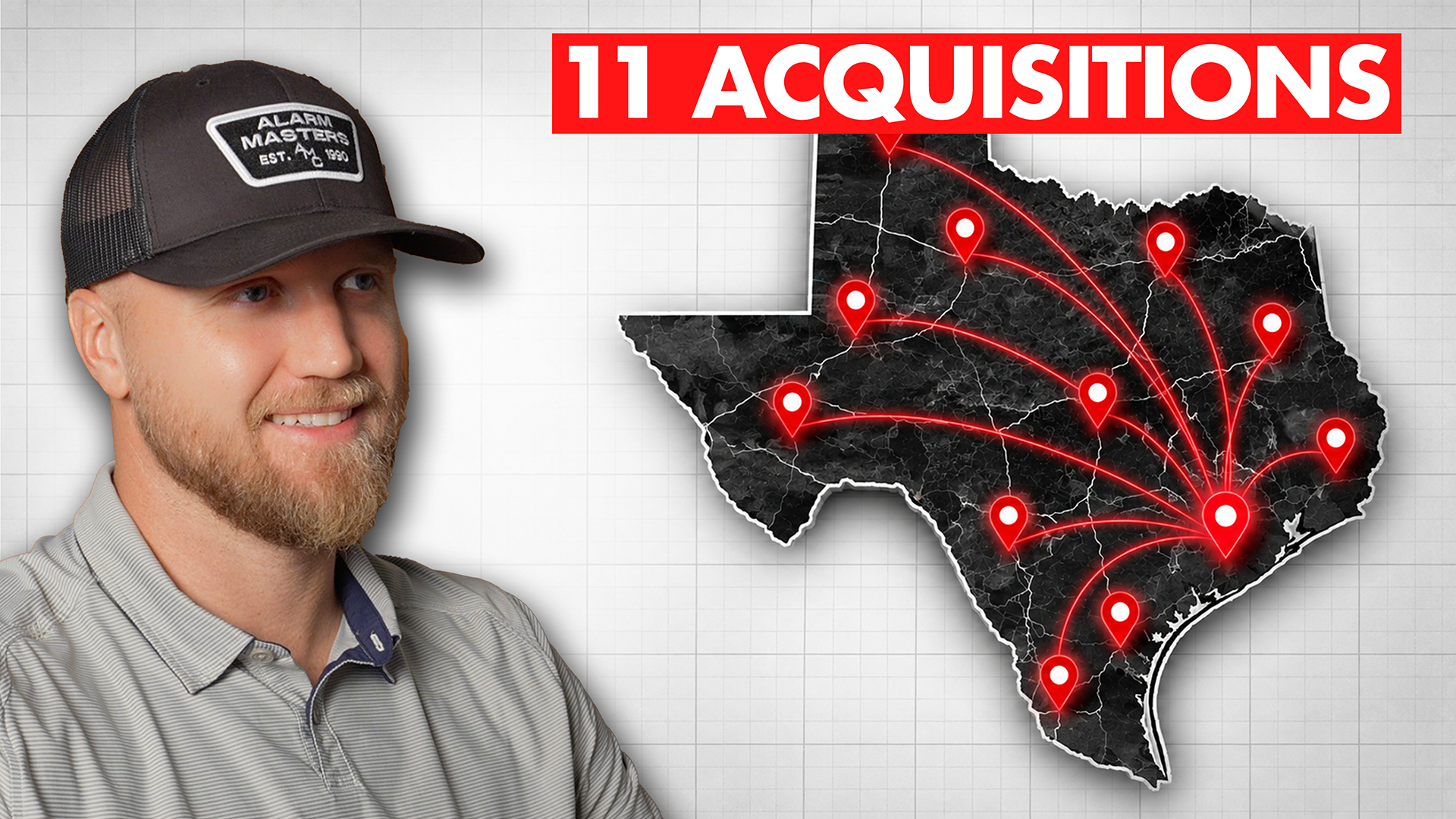
In this episode of Entry & Exit, Stephen Olmon and Collin Trimble break down the paid advertising channels security operators should actually be paying attention to. From Google PPC and Meta ads to LinkedIn campaigns and competitive intelligence, they discuss where they're investing marketing dollars, what surprised them most about B2B lead generation, and why Facebook and Instagram may be outperforming traditional search for commercial security companies.
They also share how they're building new Meta campaigns, the importance of creative and messaging, how sales teams can improve marketing performance, and why most operators should avoid managing ad platforms on their own.
In this episode:
→ Google PPC vs. Meta Ads for security companies
→ Why Meta is outperforming expectations in B2B security marketing
→ The biggest mistakes operators make with paid advertising
→ How Facebook and Instagram find commercial buyers
→ Using the Meta Ads Library for competitive intelligence
→ What makes a high-performing security ad
→ Why creative matters more than most operators think
Connect:
Stephen Olmon — https://x.com/stephenolmon
Collin Trimble — https://x.com/TXAlarmGuy
Owned and Operated
New Episodes Every Wednesday!
Subscribe For More
Oh man, Google PVC is the way the truth and the life forever. And LinkedIn ads pound for pound are just really expensive. No one is searching that on Instagram. If if you are, you're twisted. Their algorithms are incredible at this point, and they're going to present your ads based on your budget daily to the best possible people. You can do competitive analysis really easily on meta. I don't know if you know this. This is fun. This is free. Okay. But on meta, like if your ads look like Hakka Doo-Doo, you probably have to spend $50 to $100 a day minimum to get enough volume of impressions for people to see your ads. Welcome
to Entry and Exit. My name is Steven Ullman, and I also have Colin Trimble with me today, as always. And today we're talking about ads, specifically in the security industry. And uh there are a bunch of different ways to light money on fire when you are trying to run marketing campaigns. And there's all sorts of different types of marketing. You can talk about SEO and like AI-specific SEO, AEO or GEO, as the kids may say. You can talk about local SEO, Google My Business, TikTok ads, Instagram ads, meta ads, Google ads, local service ads, LinkedIn ads. Uh X, formerly Twitter has an ad box. You can spend money everywhere, and you can light a lot of it on fire if you don't know what you're doing. And uh I recently had an opportunity to talk to somebody who has spent a lot of time uh running paid marketing, specifically in our industry. And you know, we we bring this up a lot. I think it matters. There are really two different sides of the house resi and commercial. And we do both, but from a marketing dollars and a focus, we focus much more on commercial. That's right. Um, and so what I'm gonna talk about today is much more focused on commercial, but I'll call out some things on the resie side too. So uh I also have an extensive digital marketing background, and in my little pea brain, as I think about commercial security and running paid ad campaigns, I thought be really because of some experience in other similar industries, like oh man, Google PPC is the way, the truth, and the life. That's a biblical reference. Um, and I was wrong, actually.
Um I mean, we did get one incredible lead through Google.
Oh no, uh no, that that was uh organic SEO. Oh, is where that lead came from. That was not from P that was not a paid ad. Okay, and and so yes, uh, but we did. It it was a large project, and and we'll get more of those. But um, as it pertains to spending on paid ad campaigns, first of all, if you don't have the expertise yourself, please don't try to do it yourself. Yeah, because I guarantee you you you will not win, and you are uh you've got better things to do. Like work with an agency. We're happy to refer you to people, like work with an expert. Don't like try to figure it out on a random Thursday night. Don't ask you so yeah, I mean you it's like could you possibly launch a campaign on one of these platforms? Yeah, you could, you can figure it out. Is it gonna perform well? Very likely no. So either you need to have internal expertise at your company or you need to work with a proven vendor, okay? Which is true of like everything,
basically. Um so I have this assumption that Google PPC was going to be the best way to spend money on a pay to ad campaign. Now, here's a big difference. If you don't know, um if you think about Google and someone's searching on Google, that takes someone who is proactively searching for that thing. So they have much higher intent. Like uh fire alarm install Houston, Texas. Yeah, something like that. Really high intent. Great. On Meta, you are running ads and you are Facebook for my boomer friends. Yes, Facebook and Instagram. Uh Meta is the kind of uh cohesive uh brand to both of those platforms. Okay. Um what's happening is you are running ads, and for us, like let's say, so we we work with uh a lot of uh senior living facilities. So let's say we're gonna run uh a service-specific ad in a specific geography for senior living, like uh fire related to fire alarms in Houston for senior live senior living facilities. No one is searching that on Instagram, right? No one is searching that. If you are, you're twisted. Um, and so uh that's like, man, that's rough. Um no idea what you're doing. Uh but what's happening is you're looking at a picture, or the prospects looking at a picture of their grandkids. Yeah. Like, oh, it's so cute, and they scroll. And Meta is so smart and has so much data and is so um hooked into who people are, what they do, what they need, that uh their algorithms are incredible at this point, and they are going to present your ads based on your budget daily to the best possible people. That's so scary. So that's not someone who is seeking it out, right? So that's a that's a big difference, is they have basically no intent in that moment, but then you're playing a game of am I spending less money than I'm making from the leads that are coming from this channel? So talking to an expert, and he says, Man, the last few years, I gotta tell you, there is nothing on the commercial side, which again really surprised me, B2B, that is performing as well as Meta. Highest volume of leads, um, lowest, you know, cost per lead, low CPL. It is just incredible. And I couldn't believe it. I hadn't even really considered spending on Meta on the commercial side. Uh, on the residential side, yes, right? Consumer, I think Instagram, and I think you know, I you see advertisements for all these different personal, whether it's food or it's you know, skincare or jewelry or clothing or whatever, right?
Why are you getting fed those skincare, jewelry, clothes?
Cause I because I I think about my wife and I buy nice things for maybe that. Yeah, that could be it. I don't know. Um, hey, take care of your skin. Um, so um the the point there is it would make a lot more sense if someone were like, man, we're crushing it on Meta for home alarms. Okay, yeah, home security, got it. But the fact that it's performing so well on the B2B side, I said, all right, I want some of that. So we are in the middle of uh launching a uh three different verticals, several different creatives per vertical, and running a large test on meta over the next couple months, and we're gonna check back in after we
run that, we'll provide results. But the real reason that we got excited, which I know you were too when I sent it to you, was you can do competitive analysis really easily on Meta. I don't know if you know this. This is fun, this is free. Okay, you can go to the meta ads library and find any of your competitors if they're running ads on meta on Facebook or Instagram, you can see all of them. It's public data, it's it's public, you can see words they use. No, you can you can um there's a there's ways that you can find that, but it's much more difficult. Um, it is easy to find like what the words they're using, the visuals or the videos they're using, um, in what markets even like there's so much information that you can get from a competitive intelligence perspective. So when uh we're we're working with an outside vendor, when we got the report from them, we were like blown away by two different things. One, who was and who wasn't running ads on that platform, and also which verticals, which industries had a bunch of activity, and some that are our favorite verticals had like none, which we're really excited about. Yeah, yeah. So so that's that's kind of like my pet one one of my pet projects right now. I'm yeah, really, really interesting.
Well, it's super interesting because you talk to us a
little bit about this. I know we're just kind of getting into meta, but like uh in Google, you there's not a there's no creative element to it. It and there's really not a lot of there's more like strategy around keyword research, but not around anything creative. There is some elements, but not really. Meta, it's both, and it's also heavy creative. And the very this is another case for like could you do Google Ads on your own? Yeah, and could you kind of hack it together, especially in tertiary, smaller markets? Probably, yes. If you're in Houston, Dallas, major market, don't even try. Uh, but on meta, like if your ads look like Kaka Doo-doo, Google, like meta may not surface them to the right people, they may not the people that see them may not understand.
Like, yeah, I would say it's kind of funny. There's an old adage with like marketing guys, it's like uh ugly wins. And so I I would say it's just to be really specific, it's it's a little less about how aesthetically pleasing that is, and how clear it is for Meta to consume that visual, that video or that photograph or that static creative to understand who you're trying to target because they can find them for you as long as it's clear that it is someone who is.
Oh, it's not just it's not it's not just you can do video on meta. Oh yeah. Oh yeah. We yes, we should do we should do a video of me just wearing this hat and just going, Hi, we're a local alarm company.
Call me if you need yeah, we could we could try that. We'll allocate like 0.2% of the budget to that one. Um so that that that's like you have like very clearly you're inside of a senior living facility, and there is a person who's a decision maker. They're like think administrator executive director, and you're like uh have copy that is really specific about your service or their pain point, yeah, whatever it may be. And it's it's very digestible, it's not overly wordy, and it's a really clear call to action.
Yep.
Um, Meta is going to find uh if you uh can spend enough money over a long enough period, you're going to find the people. Uh they're going to find you rather, yeah, is what I'd say. And so um, and then you're just playing a return on ad spend game, right? It's like, okay, you probably have to spend fifty to a hundred dollars a day minimum um to get enough volume of uh impressions for people to see your your ads. And so you're talking kind of fifteen hundred to three thousand dollars minimum of spend a month on that platform. And I guarantee you you're gonna start to have leads roll in. Now you have to think about how you might qualify them or who do you really want to talk to and how can you position the ad or the and that's what sometimes an outside vendor is really helpful with. Yeah, but the creative, as long as you are really clear about who you're trying to reach and what the offer is, people are going to engage with it.
Yeah. I would love to do find somebody that's really good at LinkedIn ads. I'm sure, I'm sure it's more competitive.
It's you know what it is, LinkedIn ads pound for pound are just really expensive. Really? LinkedIn things very highly of their own ad inventory. Yeah. Um, it doesn't even really matter. Certain things are more expensive than others, but just generally speaking, it's just a very expensive platform uh to run ads on. But what I'll say is I also have some friends in other industries that when you finally have like a winning LinkedIn ad, it just crushes. So we could try it. I'd love to try it. We could try it.
Um, I think it's really super interesting. We the reason we did this episode is because uh of this meta push that we're doing right now, and like we really are trying to make a habit of helping the folks that listen like hear what we're doing real time. And so we may just like money on fire, and this may be a silly uh use of dollars that we shouldn't have spent, but uh I'm all about it. And and it's really funny. Um, our direct our sales director guy, he got involved in the creative, and I think that's an important note is like get your salespeople involved. You may think, no, no, no, just keep them selling, keep them. It's like, no, dude, you you need those people involved to create and provide feedback, and especially there's nothing more embarrassing than like sales guys out inside, it's like, oh, I saw your ad on in Instagram. Oh, uh and it's like they don't even have any freaking clue, right? So it's like, yes, I think that you should get the salespeople involved to at least show them what you're about to do so they have an idea.
I think it's three things it's that they're aware that you're doing it, two, that they feel included, and and also you're kind of ingratiating yourself to your sales team a little bit of like, yeah, hey, we're spending money in this area, net new, to try to further help develop leads for you. Yep. So that's good. And the third thing is you want to get the right nomenclature. Yeah. And so there was a couple times where I was on that call as well, where he kind of corrected me or corrected the vendors, like, hey, we really we actually need to kind of say it this way because people aren't we're we're not gonna make a strong enough point if we don't say it this way, or people are gonna be confused if you use this word versus that word. Like that also can help make sure that you don't waste money.
Well, he also knows that he's like he's the tip of the spear of what the customer asks, like the language they use when they're calling him to say, Hey, do y'all do uh fire alarm fire strobes? And it's like, well, nobody in our industry calls them, you know, a fire alarm, a fire strobe. Yeah, we have strobes, and you know, but it's like anyway, he that's just kind of a silly example of like the terminology that the end user uses, he knows. So we we will report back on this um and provide more information on it. You should absolutely find somebody if you're gonna do this. You should find somebody. And if you want our recommendation, like we're happy to provide some folks and some names that you can you can use and reach out to. Um, not sponsored, could be, but not sponsored, but could be. Um, and uh we'd love to help with that. And so yeah, let us know if you like this content. Leave us a comment, like, subscribe, let us know.
.webp)
.png)